When mesothelioma treatment stops working, or a doctor says surgery is no longer possible, finding another hospital can feel like a search for options that have run out.
China has specialized cancer hospitals, thoracic surgery teams, and research centers investigating immunotherapy and complex abdominal cancer treatment. But choosing the right hospital depends on one critical question: Is the mesothelioma in the lining of the lungs or the abdomen?
For pleural mesothelioma, multidisciplinary thoracic oncology teams are particularly important. For peritoneal mesothelioma, experience with cytoreductive surgery and heated intraperitoneal chemotherapy (CRS-HIPEC) may be more relevant.
Here is what the clinical evidence tells us about China's hospitals, treatment options, and the decisions international patients should make before traveling.
Key Takeaways |
|
Table of Contents
Advances in Mesothelioma Treatment in China
Mesothelioma Treatments Available or Being Studied in China
Treatment choices depend on the site of the cancer, whether surgery is feasible, prior therapies, and the patient's overall health.
Immunotherapy for pleural mesothelioma
Immunotherapy helps the immune system recognize and attack cancer cells. The combination of nivolumab and ipilimumab is an established first-line treatment option for unresectable pleural mesothelioma.
Pembrolizumab combined with pemetrexed and platinum chemotherapy is another evidence-based first-line option. The US FDA approved this combination in September 2024, following the phase III KEYNOTE-483 trial.
These treatments are part of international evidence-based care, rather than therapies uniquely developed in China. Drug approval, hospital availability, and affordability in China must be confirmed separately.
Surgery and HIPEC for peritoneal mesothelioma
For selected patients whose cancer is concentrated in the abdomen, cytoreductive surgery aims to remove visible tumors. HIPEC circulates heated chemotherapy within the abdominal cavity during surgery.
The combination may offer substantial benefit to appropriately selected patients, but it involves major surgery and carries meaningful complications.
Patients who have already undergone CRS-HIPEC and experienced recurrence require a fresh specialist assessment. Repeat surgery is not automatically appropriate; the decision depends on the distribution of disease, previous surgical results, time to recurrence, and overall condition.
CAR-T cells, cancer vaccines, and other experimental therapies
Personalized cancer vaccines, engineered immune cells, and other investigational treatments are subjects of cancer research in China and internationally.
However, there is currently insufficient high-quality clinical evidence to present CAR-T therapy or personalized cancer vaccines as established treatments for mesothelioma. A registered study or hospital announcement is not proof of clinical effectiveness or access for international patients.
What Has Chinese Research Actually Shown?
Three published findings provide a more reliable starting point than broad claims about cancer breakthroughs.
1. Chinese multicenter immunotherapy research
A Chinese retrospective study published in December 2025 examined 78 patients with pleural mesothelioma treated at tertiary hospitals, including 28 who received first-line immunotherapy.
After statistical adjustment, first-line immunotherapy was associated with better overall survival than chemotherapy-based treatment, with a hazard ratio of 0.47 (95% confidence interval 0.23–0.95).
Immune-related adverse events occurred in 14 of the 28 immunotherapy patients, mostly grade 1–2.
What this means: The results support further study of immunotherapy in Chinese clinical practice. They do not prove superiority over international hospitals or establish a new standard, because this was a small, nonrandomized study.
2. CRS-HIPEC experience in Chinese peritoneal mesothelioma patients
A Chinese retrospective analysis of 110 patients with diffuse malignant peritoneal mesothelioma reported median overall survival of 32.6 months following CRS-HIPEC.
Serious adverse events occurred in 37.3% of patients, and perioperative mortality was 2.7%.
These figures demonstrate both the potential clinical value and substantial risks of complex peritoneal cancer surgery. The study cannot establish how an individual patient would fare or whether surgery is appropriate after recurrence.
3. Research on additional treatment after CRS-HIPEC
A Chinese study published in the European Journal of Surgical Oncology in 2024 examined postoperative normothermic intraperitoneal chemotherapy for patients with malignant peritoneal mesothelioma following CRS-HIPEC.
This research reflects continuing efforts to improve management beyond surgery. However, additional postoperative treatment should not be assumed beneficial for every patient, and the findings require evaluation in the context of study design, treatment risks, and current clinical guidance.
Could a Chinese Treatment Option Fit Your Diagnosis?
Your pathology, previous treatments, and latest scans help determine which specialists and treatment approaches are worth considering.
Why International Patients Consider China — and What to Plan For
Patients may consider China for another specialist opinion, coordinated thoracic-oncology care or an assessment by a peritoneal malignancy team. Published Chinese research provides reasons to explore these options, but neither a research result nor a large hospital guarantees a suitable treatment or access to a trial.
Who May Qualify for Treatment in China?
Not every mesothelioma patient will benefit from traveling abroad.
An initial assessment typically requires pathology confirmation, imaging, a treatment history, and information about the patient's ability to manage daily activities.
Patient situation | Treatment pathway worth discussing |
Newly diagnosed unresectable pleural mesothelioma | Immunotherapy, chemoimmunotherapy, or chemotherapy |
Selected localized pleural mesothelioma | Multidisciplinary surgical evaluation |
Peritoneal mesothelioma potentially amenable to complete cytoreduction | CRS-HIPEC assessment |
Peritoneal mesothelioma recurring after CRS-HIPEC | Review of repeat-surgery feasibility, systemic treatment, or trials |
Progressive disease after several treatment lines | Second opinion, symptom management, and clinical-trial eligibility review |
There is no universal biomarker that confirms eligibility for all mesothelioma treatments. Expert pathology review, histologic subtype, prior treatment, disease extent, and organ function are central to decision-making.
Treatment Costs and International Comparisons
China may offer different pricing and treatment-access pathways from the United States or Europe, but a reliable mesothelioma treatment cost cannot be determined from general country averages.
A written hospital estimate should specify the proposed treatment, expected length of admission, drug costs, surgical and intensive-care charges when applicable, management of complications, and follow-up expenses.
Patients should also compare whether the proposed regimen is an established international standard or an investigational treatment. A lower initial estimate is not necessarily better value if it excludes necessary services.
Importantly, a trial open to local Chinese patients may not accept international participants, and a drug approved in another country may not be routinely accessible at a particular Chinese hospital.
What International Patients Should Know Before Traveling
Three practical issues deserve attention.
First, the original biopsy may need specialist pathology review, especially when distinguishing mesothelioma from other cancers. Second, trial recruitment, drug access, or surgical eligibility must be verified directly. Third, hospitals may require translated records and additional testing before offering a definitive treatment plan.
These steps matter particularly when the patient is already receiving treatment at home. Traveling without a coordinated plan could interrupt appropriate care without providing a realistic alternative.
How ChinaCureLink Helps Patients Compare Options
ChinaCureLink, a Medebound HEALTH company, helps international patients explore appropriate treatment options and specialist opinions in China.
Rather than directing every patient to a particular hospital, the team reviews medical information and helps identify hospitals and physicians relevant to the individual case.
Patients can begin with a free advisory call, explore a shortlist of up to three relevant hospitals, and seek help arranging a specialist video consultation before deciding whether to travel.
The aim is to help patients understand their options, potential limitations, and practical next steps without assuming that treatment in China will necessarily be appropriate.
Compare Mesothelioma Specialists Before Traveling
Start with a free advisory call to discuss your records, potential hospital matches, and options for a specialist second opinion.
Three Chinese Cancer Hospitals and Their Specialists
Cancer Hospital of the Chinese Academy of Medical Sciences in Beijing, Sun Yat-sen University Cancer Center in Guangzhou and Fudan University Shanghai Cancer Center are established oncology institutions to consider for a case review. This shortlist is not a mesothelioma-specific ranking, and it does not establish that one hospital has superior outcomes for this rare cancer.
For international patients, the best hospital is not necessarily the highest-ranked one. It is the center with a team experienced in the patient's specific disease, current stage, treatment history, and possible next steps.
A patient with pleural mesothelioma may need an expert in thoracic medical oncology, immunotherapy, and thoracic surgery. A patient with peritoneal mesothelioma may instead require a dedicated peritoneal malignancy team.
For example, Chinese clinical research has documented CRS-HIPEC experience in specialized peritoneal cancer centers, providing a more disease-specific reason to investigate those teams than their general oncology ranking alone.
How to Choose a Mesothelioma Specialist in China
Rather than selecting a physician based on general reputation alone, patients should look for expertise matching their disease and treatment needs.
For pleural mesothelioma, relevant specialists may include medical oncologists with immunotherapy experience, thoracic surgeons, thoracic radiologists, and pathologists familiar with rare pleural tumors.
For peritoneal mesothelioma, a surgeon experienced in peritoneal surface malignancies and CRS-HIPEC may be especially important.
A useful second opinion should answer whether the diagnosis is confirmed, whether further treatment is likely to help, and what evidence supports the proposed approach.
Patients should also ask how frequently the team manages mesothelioma specifically, whether cases are discussed by a multidisciplinary tumor board, and whether a remote consultation is possible.
The six physicians below have verified institutional affiliations and relevant thoracic-oncology interests. Specific pleural-mesothelioma experience is identified where an official biography states it. Patients with peritoneal mesothelioma should request a dedicated peritoneal malignancy and CRS-HIPEC team; the thoracic specialists listed here are not a substitute for that pathway.
Cancer Hospital, Chinese Academy of Medical Sciences — Beijing

The Cancer Hospital of the Chinese Academy of Medical Sciences combines specialist cancer care with research and training. Its thoracic surgery department dates to 1958 and treats cancers of the chest, working alongside medical oncology, radiotherapy, imaging and pathology teams.
For pleural mesothelioma, that combination is relevant to reviewing the diagnosis and weighing systemic treatment against a surgical assessment. The hospital’s medical-oncology team includes a physician whose official profile explicitly lists pleural mesothelioma. General thoracic surgical experience alone does not establish that surgery is suitable for a particular mesothelioma patient.

Dr. Jie Wang
Chief Physician, Medical Oncology; Professor, Peking Union Medical College
Her official hospital profile lists multidisciplinary treatment of lung cancer, thymic tumors and pleural mesothelioma. Her clinical and research interests include individualized treatment and molecular classification of thoracic cancers.

Dr. Shugeng Gao
Chief Physician, Thoracic Surgery; Professor
His hospital profile describes minimally invasive lung surgery, lung-preserving procedures and multidisciplinary care for locally advanced lung cancer. These are thoracic-oncology credentials; mesothelioma-specific surgical suitability requires a separate specialist assessment.
Sun Yat-sen University Cancer Center — Guangzhou

Established in 1964, Sun Yat-sen University Cancer Center has developed into an integrated cancer institution combining clinical care, education, prevention and laboratory research. Its Guangzhou campuses provide medical oncology, thoracic surgery, pathology and radiotherapy, supported by a clinical-trials center.
Its thoracic-oncology program and work on systemic therapies make it a center to consider for a specialist discussion about pleural disease. The doctors below have verified expertise in thoracic cancer treatment and drug research. Their general lung-cancer work should not be interpreted as proof of mesothelioma-specific outcomes, trial access or availability for an international patient.

Prof. Li Zhang
Professor of Medical Oncology; Deputy Director, Lung Cancer Research Institute
His official profile describes precision oncology, immunotherapy and early- to late-phase anticancer drug trials, particularly in lung cancer and nasopharyngeal carcinoma. A mesothelioma referral should first confirm that his team accepts the diagnosis and can offer an appropriate review.

Prof. Wenfeng Fang
Professor and Chief Physician, Medical Oncology
His institutional profile lists targeted treatment, immunotherapy and clinical and translational research on new drugs for lung cancer and nasopharyngeal carcinoma. These interests may inform a thoracic-oncology second opinion; mesothelioma-specific experience and treatment access must be confirmed.
Fudan University Shanghai Cancer Center — Shanghai
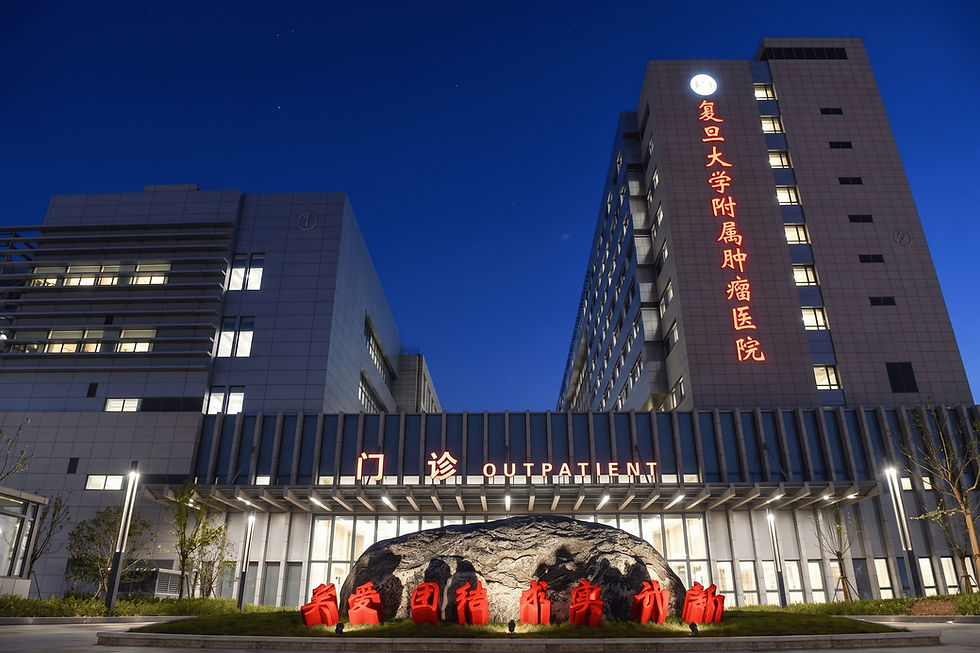
Founded in 1931, Fudan University Shanghai Cancer Center is a specialist cancer hospital with Xuhui and Pudong campuses. Its services combine surgery, medical oncology, radiation oncology and pathology, with multidisciplinary clinics and disease-focused treatment programs.
For a patient with a rare pleural tumor, coordinated review can help clarify the diagnosis and compare medical and surgical approaches. The center’s thoracic specialists below have published institutional profiles covering chest-cancer care. Patients should ask specifically about mesothelioma case experience, pathology review and the proposed treatment pathway, rather than infer those details from the hospital’s general reputation.

Prof. Haiquan Chen
Thoracic Surgeon; Thoracic Oncology Specialist
His hospital profile describes early diagnosis and multidisciplinary treatment of thoracic tumors, especially lung and esophageal cancer, with an emphasis on minimally invasive surgery. A mesothelioma case needs disease-specific evaluation before any operation is considered.

Dr. Jialei Wang
Chief Physician, Medical Oncology; Thoracic Oncology Specialist
Her university profile describes systemic treatment of thoracic malignancies, precision and individualized care, and new-drug clinical trials. These are relevant medical-oncology credentials; they do not establish eligibility for a mesothelioma regimen or trial.
Practical Next Steps
Before committing to international treatment, confirm the diagnosis and collect the pathology report, latest CT or PET/CT scans, and previous treatment records.
Next, identify whether the priority is immunotherapy, surgical assessment, management of recurrence, or a clinical trial. Compare hospitals on relevant expertise and request a specialist opinion before making travel arrangements.
Proceed only when the expected treatment, eligibility criteria, possible risks, financial implications, and follow-up arrangements are sufficiently clear.
Patient Experiences
These are general ChinaCureLink service experiences and should not be read as evidence of mesothelioma treatment outcomes.

China CureLink operates under Medebound HEALTH — an internationally recognized healthcare navigation company incorporated in New York, with operations across North America and Asia-Pacific.
Frequently Asked Questions
What is the best mesothelioma hospital in China?
There is no independently verified, mesothelioma-specific hospital ranking that establishes one hospital as the best. Major oncology hospitals such as the Cancer Hospital of the Chinese Academy of Medical Sciences, Sun Yat-sen University Cancer Center, and Fudan University Shanghai Cancer Center are relevant starting points for general oncology assessment. Peritoneal mesothelioma may require a more specialized surgical center.
Is immunotherapy for mesothelioma available in China?
Chinese hospitals have published clinical experience with immunotherapy for pleural mesothelioma. However, availability of any specific medicine or combination, its regulatory status, and access for an international patient must be checked with the treating hospital.
Can China treat recurrent peritoneal mesothelioma?
Potential treatment approaches include systemic therapy, selected surgical evaluation, and clinical research. Whether repeat CRS-HIPEC is appropriate depends on the individual's previous operation, current extent of disease, health status, and specialist assessment.
Final Considerations
China has substantial oncology infrastructure and published research relevant to both pleural and peritoneal mesothelioma. Its research on immunotherapy and CRS-HIPEC provides credible reasons for selected patients to explore a Chinese specialist opinion.
However, no hospital ranking, clinical study, or promising treatment announcement can substitute for assessing an individual patient's diagnosis and options.
The most useful next step is usually an independent specialist review, followed by direct confirmation of treatment suitability, hospital access, and costs before traveling.
Understand Your Mesothelioma Treatment Options
Speak with ChinaCureLink about your medical records and possible specialist pathways in China before making a travel decision.
Sources and Further Reading
About ChinaCureLink
ChinaCureLink helps patients across the world access the best cancer treatment at China's top hospitals, without the delays, language barriers, and administrative confusion that typically come with seeking care abroad.
We connect patients directly with China's top cancer hospitals, ensuring that from the first case submission through to treatment and follow-up, every step is guided, translated, and coordinated by a team experienced in cross-border patient care.
ChinaCureLink is proudly affiliated with Medebound HEALTH — founded by US physicians, with over 10 years of experience and more than 3,000 patients served worldwide, Medebound HEALTH is recognized by Forbes and it is one of the most trusted patient cross-border concierge service company across North America and the Asia Pacific.
Disclaimer
This article is for informational purposes only and is not medical or financial advice. Treatment eligibility, protocols, and costs vary by individual case — confirm specifics with a coordinator and treating physician before making any decisions.
