Updated: Sep 21
Introduction
Choosing the right cancer hospital in China is one of the most important — and most overwhelming — decisions a patient or family will face. With hundreds of hospitals across the country, knowing which centers combine research excellence, high case volume, and specialty depth takes research that most people don't have time for.
This guide focuses on the five best cancer hospitals in China most frequently recommended for complex and specialty oncology care. For each hospital you'll find its strongest cancer specialties, what makes it stand out, and who it's best suited for — so you can match your diagnosis to the right center before making any travel or treatment commitment.
If you need personalized guidance on which hospital fits your case, ChinaCureLink.com specializes in connecting international and overseas patients with the right cancer specialists in China.
How These Top Cancer Hospitals in China Were Selected
Not all rankings use the same criteria. This list was built around the factors that matter most in real-world cancer care:
National reputation and peer recognition
Specialty depth — not just general oncology but leadership in specific tumor types
Research output and participation in national or international clinical trials
Case volume — teams that treat thousands of similar tumors per year build faster, more confident clinical judgment
Multidisciplinary infrastructure: surgery, radiation oncology, medical oncology, pathology, and imaging under one roof
Note: The "best" hospital is always relative to your diagnosis. A center world-class in liver cancer surgery may be average for lymphoma or rare pediatric tumors. Always match the hospital to the cancer type first.
Quick Comparison: Top 5 Cancer Hospitals in China
Hospital | City | Cancer Specialty | Case Volume | Best For |
Cancer Hospital, CAMS | Beijing | All cancer types; rare tumors | Very High | Second opinions, rare cancers |
Sun Yat-sen Univ. Cancer Center | Guangzhou | Nasopharyngeal carcinoma, GI | Very High | NPC, southern-region cancers |
Fudan Univ. Shanghai Cancer Center | Shanghai | Multidisciplinary, pathology | High | Complex diagnosis, MDT care |
West China Hospital, SCU | Chengdu | Thoracic oncology, minimally invasive | High | Lung & chest tumors, western China patients |
Zhongshan Hospital, Fudan Univ. | Shanghai | Hepatocellular carcinoma, liver surgery | High | Liver cancer, hepatectomy |
The Top 5 Cancer Hospitals in China — In Depth
1. Cancer Hospital, Chinese Academy of Medical Sciences (CAMS) — Beijing

CAMS is China's national cancer center, and that designation carries real weight. As the country's primary referral site for rare tumors, complicated post-treatment cases, and patients who need expert second opinions, CAMS sees the full spectrum of cancer types — and at very high volumes.
Its doctors are often the same specialists who help draft national treatment guidelines, which means patients benefit from clinical thinking at the cutting edge of Chinese oncology. For anyone with an unusual diagnosis, a case that has not responded to prior treatment, or a need for a credible second opinion, CAMS is frequently the first name mentioned.
Specialty strength: Rare tumors, broad oncology, national referrals
Key advantage: Shapes national clinical standards; highest-level expertise
Complex or rare cancers, second opinions, post-treatment reevaluation
2. Sun Yat-sen University Cancer Center (SYSUCC) — Guangzhou

SYSUCC is one of China's most prominent dedicated cancer hospitals, and its reputation is built on a specific clinical strength: nasopharyngeal carcinoma (NPC). This cancer is significantly more prevalent in southern China than in most other parts of the world, and SYSUCC has accumulated one of the largest NPC case volumes of any center globally.
High case volume is not just a statistic — it translates directly into greater familiarity with difficult anatomy, treatment side effects, recurrence patterns, and salvage therapy. SYSUCC also has strong research output and full-range oncology services.
Specialty strength: Nasopharyngeal carcinoma, gastrointestinal cancers
Key advantage: Among the world's highest NPC case volumes
NPC, southern China patients, coordinated multidisciplinary care
3. Fudan University Shanghai Cancer Center (FUSCC) — Shanghai
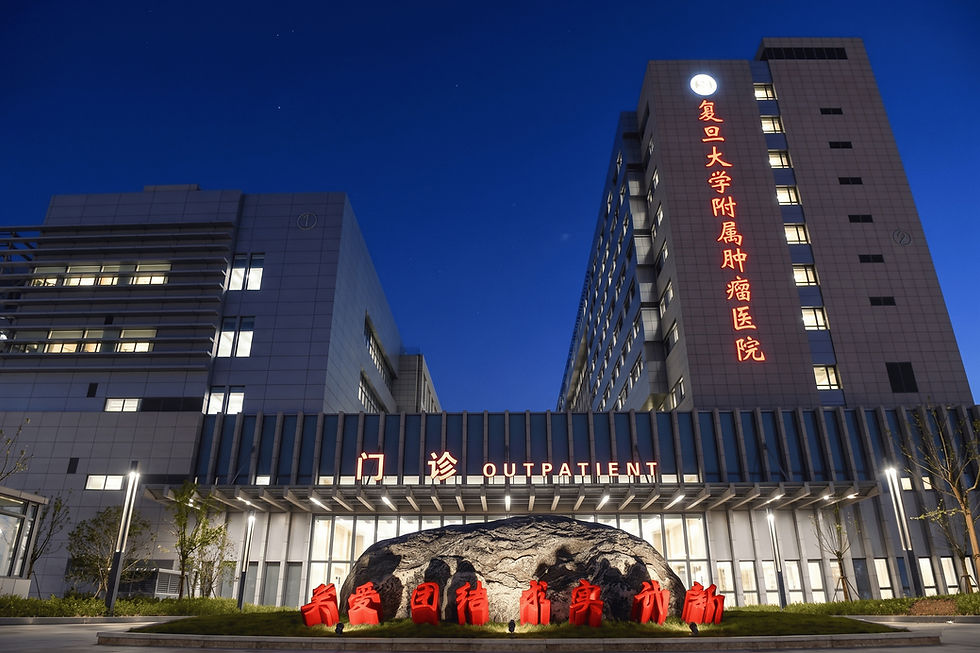
FUSCC is widely respected as a center of multidisciplinary oncology excellence. Its model — where surgeons, medical oncologists, radiation specialists, and pathologists review cases together in tumor board settings — is considered one of the strongest in China.
Its pathology department is a particular asset. Cancer diagnosis begins with accurate tissue analysis, and subtle differences in tumor subtype can change the entire treatment plan. FUSCC's capacity for precise pathological review makes it especially valuable for patients who need clarity on a difficult or ambiguous diagnosis before committing to treatment.
Specialty strength: Multidisciplinary tumor boards, pathology, breast cancer
Key advantage: Integrated MDT model; strong diagnostic accuracy
Complex diagnosis, patients needing coordinated multi-specialist review
4. West China Hospital, Sichuan University — Chengdu

West China Hospital is one of the largest academic medical centers in Asia and a major hub for cancer care in western China. Its oncology program is particularly strong in thoracic oncology and minimally invasive surgical techniques — capabilities that matter significantly for patients with lung tumors and other chest cancers.
Minimally invasive surgery typically means shorter recovery times, fewer complications, and faster access to the next phase of treatment such as adjuvant chemotherapy or radiation. For patients in Sichuan, Chongqing, Yunnan, and neighboring provinces, West China Hospital offers major academic center expertise without requiring travel to Beijing or Shanghai.
Specialty strength: Thoracic oncology, minimally invasive surgery, lung cancer
Key advantage: Largest academic center in western China
Lung and chest tumors, western China patients, surgical cases
5. Zhongshan Hospital, Fudan University — Shanghai

Zhongshan Hospital is not a dedicated cancer hospital, but it earns a place on this list for one reason: liver cancer surgical expertise. China has one of the highest rates of hepatocellular carcinoma (HCC) in the world — driven largely by hepatitis B prevalence — and Zhongshan has built an internationally recognized program around liver tumor surgery, including complex hepatectomy procedures.
For patients with primary liver cancer, large or technically demanding liver lesions, or tumors requiring staged resection, Zhongshan's surgical volume and expertise make it a highly relevant option — even if liver cancer is not the hospital's only clinical focus.
Specialty strength: Hepatocellular carcinoma (HCC), liver surgery, hepatectomy
Key advantage: One of China's highest liver tumor surgical volumes
Liver cancer patients prioritizing surgical expertise
→ Read Full Guide: Integrative Oncology in China – Combining TCM with Standard Cancer Care
Learn how Traditional Chinese Medicine and modern cancer treatments are combined to support comprehensive oncology care in China.
How to Choose the Right Cancer Hospital in China for Your Diagnosis
A hospital's overall reputation is a starting point — not a final answer. The most important match is between your specific cancer type and the hospital's strongest clinical team. Here is a practical framework:
Step 1 — Start With Your Exact Diagnosis
Before researching hospitals, confirm your cancer type, stage, and subtype from your pathology report. Liver cancer, lung cancer, nasopharyngeal carcinoma, lymphoma, and rare tumors all require different expertise. A hospital that is exceptional in one area may be average in another.
Step 2 — Look for Specialty Depth, Not Just General Oncology
Search for evidence of high case volume in your specific cancer type, clinical trials related to your diagnosis, published research from the oncology department, and a dedicated tumor board that reviews complex cases.
Step 3 — Confirm Integrated Care Capability
The best outcomes often come from hospitals that offer surgery, radiation oncology, medical oncology, pathology, and imaging in a coordinated system. Fragmented care — even across excellent individual departments — creates gaps.
Step 4 — Ask Practical Questions Before Committing
Question to Ask | Why It Matters |
How many cases like mine per year? | High volume = more experience & better outcomes |
Is MDT (tumor board) review available? | Multi-specialist input improves treatment accuracy |
Can surgery, radiation & chemo be done here? | Integrated care avoids coordination gaps |
What is the average wait time for diagnosis? | Delays can affect prognosis and increase stress |
Is international patient support available? | Crucial for overseas Chinese or foreign nationals |
Can I get a second opinion remotely? | Saves travel; confirms diagnosis before commitment |
→ Read Full Guide: FDA-Approved CAR-T Therapies 2026 – Products, Advantages & Costs
Compare FDA-approved CAR-T products, including treatment benefits, costs, and key differences.
Frequently Asked Questions — Cancer Hospitals in China
Which is the best cancer hospital in China overall?
The Cancer Hospital of the Chinese Academy of Medical Sciences (CAMS) in Beijing is widely regarded as China's national cancer centre and the top referral destination for complex, rare, and post-treatment cases. However, "best overall" depends on cancer type. Sun Yat-sen University Cancer Center (Guangzhou) leads in nasopharyngeal carcinoma, Fudan University Shanghai Cancer Center excels in multidisciplinary care, Zhongshan Hospital leads in liver cancer surgery, and West China Hospital is the top centre in western China for thoracic oncology.
If you are unsure which institution matches your diagnosis, ChinaCureLink provides specialist hospital-matching for international patients based on tumour type, stage, and treatment history.
Is cancer treatment in China world-class?
Yes — for specific cancer types at specialized centers. China's top oncology hospitals match international standards in surgical technique, radiation technology (including proton and IMRT), and targeted therapy access. Hospitals like CAMS and SYSUCC appear in global oncology rankings. That said, quality varies significantly between top-tier academic centers and smaller regional hospitals.
Can foreigners or overseas Chinese receive cancer treatment in China?
Yes. Most top cancer hospitals in China accept international patients, though the level of dedicated international patient services varies widely. CAMS, Fudan University Shanghai Cancer Center, and West China Hospital all have experience managing overseas patients.
ChinaCureLink is a medical concierge service built specifically for this journey — coordinating hospital introductions, verifying documentation requirements, arranging interpreter support, and managing appointment scheduling so patients can focus on treatment rather than logistics.
How do I get a second opinion from a top cancer hospital in China?
Several leading hospitals — including CAMS and Fudan University Shanghai Cancer Center — offer formal second opinion consultations. These can sometimes be arranged remotely by submitting pathology slides, imaging files (CT, MRI, PET-CT), and clinical records through the hospital's international department.
This is a core service offered by ChinaCureLink — facilitating remote and in-person second opinions with China's leading oncologists, including record translation, case preparation, and interpretation of specialist findings. Confirm whether remote review is available before making travel arrangements; ChinaCureLink can advise on this for your specific case.
What cancers are most commonly treated at Chinese cancer centers?
Given China's disease epidemiology, the highest case volumes at top Chinese cancer hospitals are typically in liver cancer (hepatocellular carcinoma), lung cancer, gastric cancer, colorectal cancer, breast cancer, nasopharyngeal carcinoma, and esophageal cancer. These centers have deep experience with these tumor types specifically due to their prevalence in the Chinese population.
Does high hospital volume actually improve cancer outcomes?
Research consistently shows that higher surgical volume correlates with lower complication rates and better survival outcomes for complex cancer operations — particularly liver, thoracic, and pancreatic surgery. For medical oncology, high-volume centres also tend to offer faster access to clinical trials and greater experience managing rare treatment toxicities.
Volume matters, especially for surgery. ChinaCureLink helps patients identify which Chinese hospitals hold the highest case volumes for their specific cancer type, ensuring referral to the most experienced team available.
Key Takeaways
The Cancer Hospital of CAMS (Beijing) is China's national cancer center and top destination for rare, complex, or post-treatment cases.
Sun Yat-sen University Cancer Center (Guangzhou) has one of the world's highest case volumes for nasopharyngeal carcinoma.
Fudan University Shanghai Cancer Center (Shanghai) is a leader in multidisciplinary tumor boards and diagnostic pathology.
West China Hospital (Chengdu) is the top academic oncology center in western China, with particular strength in thoracic surgery.
Zhongshan Hospital (Shanghai) is the go-to center for liver cancer surgery and hepatectomy expertise.
Next Steps
Before making any hospital or travel decision:
Confirm your diagnosis subtype from your pathology report
Research each hospital's published case volume and outcomes data for your cancer type
Contact the hospital's international or oncology department directly for appointment timelines
Ask whether a remote second opinion is available to save unnecessary travel
Seek guidance from an oncologist who is familiar with the Chinese hospital system
Learn about treatment options, costs, travel planning, and essential information for Southeast Asian patients seeking care in China.
About ChinaCurelink
ChinaCurelink helps patients across Southeast Asia — including Indonesia, Malaysia, the Philippines, Vietnam, and Thailand — access the best cancer treatment at China's top hospitals, without the delays, language barriers, and administrative confusion that typically come with seeking care abroad.
We connect patients directly with China's top 5 cancer hospitals, ensuring that from the first case submission through to treatment and follow-up, every step is guided, translated, and coordinated by a team that understands both the medical and cultural needs of Southeast Asian patients.
ChinaCurelink is proudly affiliated with Medebound HEALTH— an international medical concierge company headquartered in New York, specialized in securing premium second opinions from top US hospitals and specialists. With over 10 years of experience and more than 3,000 patients served worldwide, Medebound HEALTH is recognized as one of the leading patient access services across North America and the Asia Pacific, Medebound HEALTH brings the same standard of expert care coordination to every patient we serve.
This article is for informational purposes only and does not constitute medical advice. All treatment decisions should be made in consultation with a qualified oncologist who has reviewed your complete medical history and current diagnostic information.

Comments