KEY TAKEAWAYS |
• Confirm the cancer type and stage before choosing a hospital or treatment. NSCLC and SCLC are not interchangeable. • For NSCLC, ask about biomarker testing, including relevant driver alterations and PD-L1. Results may change the treatment discussion. • Request a multidisciplinary review when surgery, radiotherapy and systemic treatment need to be coordinated. • Prepare translated records and original scans, confirm the campus and clinician, and obtain an itemized estimate and follow-up plan before travel. |
Introduction
Looking for the best lung cancer hospital in China? The Cancer Hospital of the Chinese Academy of Medical Sciences in Beijing, Fudan University Shanghai Cancer Center in Shanghai and Sun Yat-sen University Cancer Center in Guangzhou are three specialist options to discuss with your treating team. The right choice depends on the exact diagnosis, stage, molecular findings, previous treatment and your overall health.
This is an unranked shortlist, not a claim that one hospital is best for everyone. Lung cancer includes non-small-cell lung cancer (NSCLC) and small-cell lung cancer (SCLC), which need different treatment pathways. A useful specialist opinion should explain the goal of treatment, the alternatives, the likely burdens and how care will continue after you return home.
Table of Contents
Lung cancer treatment: start with the diagnosis and stage
Early-stage NSCLC may be considered for surgery or other local treatment, depending on the tumor and the patient's fitness. Some operable cancers need systemic treatment before or after surgery. Locally advanced disease can require a coordinated plan involving chemotherapy, radiation and immunotherapy in appropriate settings. Metastatic disease usually calls for systemic treatment and supportive care rather than choosing a surgical technique first.
Biomarker testing can help guide NSCLC treatment. Ask which molecular tests are needed for the histology and clinical setting, whether the biopsy contains enough tissue and how results such as EGFR, ALK and PD-L1 affect the options. A positive marker does not mean every targeted drug is suitable, and a high PD-L1 result should be interpreted alongside the wider clinical picture.
SCLC follows a different pathway. Limited-stage disease often involves chemotherapy and chest radiotherapy, with additional treatment considered in appropriate cases. Extensive-stage disease commonly involves systemic treatment, including chemotherapy and immunotherapy in suitable patients. The NSCLC studies described below should not be applied to SCLC.
Ask the team to address breathing symptoms, pain, nutrition, smoking cessation support where relevant, rehabilitation and symptom control. If an operation is proposed, discuss lung function, the planned extent of resection, lymph-node assessment, complications and recovery. A smaller incision or a robotic system is not proof of a better outcome for every patient.
Clinical advances from China: what the evidence shows
RATIONALE-315 was a randomized phase III study of 453 patients in China with resectable stage II–IIIA NSCLC. It compared tislelizumab with placebo around surgery, with both groups receiving preoperative platinum-based chemotherapy. The final analysis, published in Annals of Oncology in 2026, reported a median follow-up of 38.5 months. Overall survival at 36 months was 79.3% versus 69.3%, with a hazard ratio for death of 0.65; median overall survival had not been reached in either group.
The earlier safety report found grade 3 or worse adverse events in 72% versus 66% of patients and serious treatment-related adverse events in 15% versus 8%. The survival findings support a perioperative option for selected patients, not an individual survival prediction. The trial did not compare hospitals or establish the best approach for every molecular subtype, stage or person with limited fitness.
HARMONi-2 randomized 398 previously untreated patients in China with advanced PD-L1-positive NSCLC without sensitizing EGFR mutations or ALK translocations. The 2025 Lancet publication reported median progression-free survival of 11.1 months with ivonescimab versus 5.8 months with pembrolizumab, with a hazard ratio of 0.51. Grade 3 or higher treatment-related adverse events occurred in 29% versus 16%.
A September 2026 IASLC conference update reported median overall survival of 30.8 versus 22.6 months, with a hazard ratio of 0.73, at the August 20, 2026 data cutoff. Serious treatment-related adverse events were reported in 29.9% versus 21.6%. This was a conference-reported interim survival analysis, distinct from the earlier journal publication. It does not prove superiority over every chemotherapy–immunotherapy combination or apply to all lung cancers.
Neither study guarantees that an overseas patient will qualify for the treatment or obtain it at a particular hospital. Ask the team to explain the current evidence, regulatory status, expected toxicity, monitoring and alternatives for the exact diagnosis. Trial participation and routine clinical access are separate questions.
Why international patients consider China—and what to confirm
Specialist thoracic oncology departments, molecularly guided treatment programs and participation in clinical research are reasons to consider an assessment in China. The meaningful comparison is the proposed plan and the team's ability to deliver and monitor it. A hospital's reputation alone cannot establish the best treatment for your case.
Send pathology and biomarker reports, imaging reports and original DICOM scans, previous operation notes, radiotherapy plans, drug names and treatment dates, response assessments, current medicines, allergies and a short clinical timeline. Ask whether the hospital needs slides or tissue blocks, additional testing or translated documents.
Confirm the exact campus, department, appointment route and whether a remote review can clarify the questions before travel. Arrange qualified interpretation for clinical discussions, consent and discharge instructions. An English website does not guarantee an English-speaking clinical team or immediate access to a named professor.
Obtain an itemized estimate covering assessment, pathology review, testing, medicines, radiotherapy or surgery where relevant, admission, complication management and follow-up. Include interpretation, accommodation, caregiver travel and a possible extended stay. This guide does not quote a treatment price because the diagnosis and proposed plan have not been assessed.
Your clinician should assess travel fitness, particularly if breathing is limited or other medical needs affect the journey. Agree who will supervise medicines, rehabilitation, blood tests, scans and urgent problems after you return home. Do not interrupt effective care while waiting for an overseas opinion.
How ChinaCureLink can help organize an assessment
ChinaCureLink can help organize records, translation requirements and questions for a hospital assessment. Clinicians remain responsible for diagnosis, eligibility and treatment recommendations. Coordination does not guarantee admission, a named doctor's appointment, trial enrollment or a clinical outcome. Ask for the service scope and fees in writing.
Three lung cancer hospitals in China and their specialists
The order below is editorial, not a ranking. Clinicians are listed for documented relevant interests. Inclusion does not imply a commercial partnership, confirmed availability or an individual treatment recommendation.
Cancer Hospital, Chinese Academy of Medical Sciences — Beijing

Established in 1958, the Cancer Hospital of the Chinese Academy of Medical Sciences is a specialist oncology institution linked with the National Cancer Center. Its thoracic surgery department documents minimally invasive lung surgery and multimodal care for locally advanced thoracic tumors. Its medical-oncology specialists also work on individualized lung cancer treatment and molecular classification.
This combination makes the hospital relevant when a case needs both a surgical opinion and a systemic-treatment review. Useful questions include whether the diagnosis and stage are secure, whether surgery should be preceded by treatment, how much lung would be removed and how pathology or molecular findings change the plan.
Confirm the campus and clinical unit before travel. Ask who will coordinate surgery, medical oncology, radiation oncology and pathology when those specialties are needed, and request a written recommendation that your home team can review.

Professor Jie Wang
Chief Physician and Professor — Medical Oncology
Professor Wang's official profile documents multidisciplinary, individualized lung cancer care and translational research, including molecular classification and precision treatment. Her expertise is relevant to complex systemic-treatment questions. Ask which team will review the records and whether the consultation concerns routine therapy, a resistance problem or a particular clinical study.

Professor Shugeng Gao
Chief Physician and Professor — Thoracic Surgery
Professor Gao's institutional profile describes minimally invasive lung surgery, lung-function-preserving procedures and individualized multidisciplinary treatment for locally advanced lung cancer. These interests support a surgical assessment of the extent and timing of treatment. Whether a limited resection or another operation is appropriate requires review of the tumor and the patient's fitness.
Fudan University Shanghai Cancer Center — Shanghai
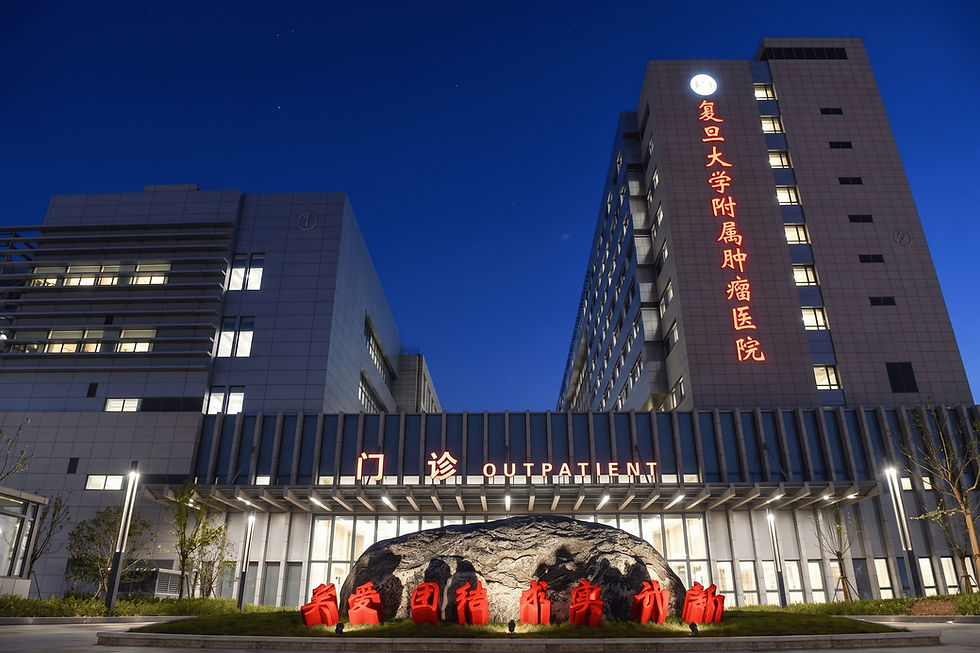
Founded in 1931, Fudan University Shanghai Cancer Center is a university-affiliated specialist cancer hospital with Xuhui and Pudong campuses. Its thoracic oncology work brings together surgery, medical oncology and other cancer disciplines. Institutional and professional sources document a sustained focus on lung cancer multidisciplinary treatment and clinical research.
This center is relevant to both early-stage surgical decisions and systemic-treatment assessment. A surgical opinion should explain the extent of resection and lymph-node assessment, while a medical-oncology review should connect pathology, molecular results, prior treatment and toxicity to the proposed drug plan.
Confirm the campus and specialist unit rather than choosing by a hospital name alone. Bring the complete scan and pathology record, especially if previous reports disagree about stage or if a targeted treatment has stopped working. Ask how recommendations will be coordinated with clinicians at home.

Professor Haiquan Chen
Chief Physician and Professor — Thoracic Surgery
Professor Chen's professional profile describes surgery-led multidisciplinary thoracic oncology, minimally invasive lung surgery and research on tailoring the extent of lung resection and lymph-node surgery. His Fudan affiliation is also documented in the RATIONALE-315 publications. These credentials support a surgical opinion, not a promise that surgery is suitable or necessary.

Dr. Jialei Wang
Chief Physician — Thoracic Medical Oncology
Dr. Wang's university-hosted profile identifies thoracic malignancy drug treatment, precision and individualized care, and new-drug clinical trials among her interests. Recent CSCO material also documents her Fudan affiliation and NSCLC teaching. Her expertise is relevant to a lung cancer medical-oncology assessment; treatment and trial availability must be confirmed individually.
Sun Yat-sen University Cancer Center — Guangzhou

Established in 1964, Sun Yat-sen University Cancer Center integrates oncology care, education, research and prevention. Its services include medical oncology, thoracic surgery, pathology and radiotherapy, alongside a clinical-trials center. Its Lung Cancer Research Institute and the specialists below provide a documented focus on lung cancer systemic treatment and drug development.
This is a relevant option for reviewing biomarker-directed treatment, immunotherapy, resistance to previous therapy or a possible study. Research activity is useful context, but it does not establish that a matching trial is open or that an international patient will qualify.
Confirm the campus, international-patient route and clinical team before travel. Ask whether tissue or repeat molecular testing is needed, how side effects will be monitored and how treatment can continue safely after returning home. A written plan should identify both the clinical goals and the follow-up responsibilities.

Professor Li Zhang
Professor — Medical Oncology and Lung Cancer Research
Professor Zhang's institutional profile describes lung cancer medical oncology, precision treatment, immunotherapy and clinical drug development. It identifies his work with the Lung Cancer Research Institute. These interests are relevant to complex systemic-treatment and research questions. The department should confirm which clinician will assess the case and what options are actually available.

Professor Wenfeng Fang
Professor and Chief Physician — Medical Oncology
Professor Fang's official profile lists lung cancer targeted treatment, immunotherapy and clinical and translational research on innovative drugs. It also documents work on treatment resistance and molecularly defined cancers. His interests support a medical-oncology second opinion, but a research publication does not establish access to a specific drug or trial.
Get a Second Opinion Before You Fly to China
A remote second opinion may clarify the diagnosis, stage, molecular findings and treatment sequence before travel. For suitable cases, ChinaCureLink can help coordinate the request and organize the record package. The hospital must confirm availability, suitability and whether further testing or an in-person examination is needed.
The following patient stories and feedback describe general coordination experiences. They are not lung cancer outcome evidence and do not predict an individual result.
What Patients Say About ChinaCureLink & Medebound HEALTH

FAQs about lung cancer hospitals in China
Which is the best lung cancer hospital in China?
There is no single best hospital for every patient. The Cancer Hospital of the Chinese Academy of Medical Sciences, Fudan University Shanghai Cancer Center and Sun Yat-sen University Cancer Center are three specialist options with documented lung cancer expertise. Compare the proposed plan for your cancer type, stage, molecular results and prior treatment, plus language support, costs and follow-up. This shortlist is unranked.
Can international patients receive targeted therapy or immunotherapy for lung cancer in China?
Patients may be considered for an assessment, but treatment depends on the diagnosis, stage, relevant biomarker results, previous therapy and general health. The hospital must confirm acceptance, current drug availability and the appropriate regulatory pathway. A trial publication does not guarantee enrollment or access, and targeted therapy and immunotherapy are not interchangeable.
What records are needed for a lung cancer hospital assessment?
Prepare pathology and biomarker reports, original imaging and reports, prior surgery and radiotherapy records, drug names and treatment dates, response assessments, current medicines, allergies and a clinical timeline. Ask whether tissue, slides or translated records are required. Confirm travel fitness, interpretation, an itemized estimate and a follow-up plan before arranging travel.
Prepare your next step
For help organizing a lung cancer hospital assessment, share the diagnosis, stage, biomarker results, treatment history and available reports with ChinaCureLink. The aim is to prepare clear questions for the clinical team. Your treating clinician should guide urgent care, travel fitness and decisions about ongoing treatment.
Sources and further reading
Non-small-cell lung cancer treatment — National Cancer Institute
Small-cell lung cancer treatment — National Cancer Institute
Cancer Hospital, Chinese Academy of Medical Sciences — Beijing
Professor Shugeng Gao — institutional or professional profile
Professor Haiquan Chen — institutional or professional profile
Professor Wenfeng Fang — institutional or professional profile
Information checked for this draft on October 30, 2026. Clinical practice, services, schedules and trial access can change. Institutional photographs identify the hospital or clinician shown and do not imply a commercial affiliation.
About ChinaCureLink
ChinaCureLink helps patients across the world access the best cancer treatment at China's top hospitals, without the delays, language barriers, and administrative confusion that typically come with seeking care abroad.
We connect patients directly with China's top cancer hospitals, ensuring that from the first case submission through to treatment and follow-up, every step is guided, translated, and coordinated by a team experienced in cross-border patient care.
ChinaCureLink is proudly affiliated with Medebound HEALTH — founded by US physicians, with over 10 years of experience and more than 3,000 patients served worldwide, Medebound HEALTH is recognized by Forbes and it is one of the most trusted patient cross-border concierge service company across North America and the Asia Pacific.
Disclaimer
This article is for informational purposes only and is not medical or financial advice. Treatment eligibility, protocols, and costs vary by individual case — confirm specifics with a coordinator and treating physician before making any decisions.
