Medicaly Reviewed by Dr . Wang
KEY TAKEAWAYS |
• Confirm the integrated pathology diagnosis, including IDH status and MGMT promoter methylation, before comparing treatment proposals. • Established treatment commonly combines maximal safe surgery with radiotherapy and temozolomide; age, fitness and tumor features influence the plan. • Tumor treating fields have randomized evidence in selected newly diagnosed patients. Glioblastoma CAR-T remains investigational. • Request a multidisciplinary review, translated records, an itemized estimate and a follow-up plan before making travel commitments. |
Introduction
Looking for the best glioblastoma hospital in China? Beijing Tiantan Hospital, Huashan Hospital in Shanghai and Sun Yat-sen University Cancer Center in Guangzhou are three institutions to consider with your treating team. Their relevant strengths include glioma surgery, specialist assessment and coordinated treatment. Choosing between them requires review of the diagnosis, brain scans, molecular results, neurological function and previous treatment.
This is an unranked shortlist, not proof that one hospital offers better survival for everyone. Glioblastoma is an aggressive brain tumor; treatment aims to control disease while protecting function and quality of life. No hospital can guarantee a cure. An overseas opinion should clarify a realistic plan and support timely care rather than delay it.
Table of Contents
Glioblastoma treatment: establish the diagnosis first
In current classification, adult glioblastoma is an IDH-wildtype tumor. An IDH-mutant grade 4 astrocytoma is a different diagnosis, even when older reports use similar terminology. Ask for neuropathology review and an explanation of any additional molecular tests needed. MGMT promoter methylation helps inform prognosis and discussion of temozolomide benefit; it is not a stand-alone promise of response.
Maximal safe surgery means removing as much tumor as reasonably possible while protecting important brain functions. Biopsy may be appropriate when resection is unsafe. For suitable newly diagnosed patients, postoperative radiotherapy with concurrent and subsequent temozolomide is established care. Older or less fit patients may need a shorter radiation schedule or another individualized approach. Supportive care and rehabilitation belong in the discussion throughout treatment.
Treatment advances: separate established evidence from early research
Tumor treating fields (TTFields) deliver low-intensity electrical fields through scalp arrays. In the international EF-14 randomized trial, 695 patients who had completed initial chemoradiation received maintenance temozolomide with or without TTFields. Median overall survival from randomization was 20.9 versus 16.0 months. This was not a comparison of Chinese hospitals and does not predict an individual outcome.
The device required prolonged daily use, with treatment prescribed for at least 18 hours a day. Mild or moderate skin reactions under the arrays occurred in 52% of the TTFields group. Ask about suitability, scalp care, practical support, ongoing device costs and access after returning home. A published benefit does not establish that every patient can obtain or tolerate the treatment.
A China-based phase 1 study published in Nature Medicine in 2026 evaluated intracranial B7-H3-targeted CAR-T cells, TX103, in 15 selected adults with recurrent glioblastoma. Median overall survival was 19.1 months from the first infusion. The small, single-arm study primarily assessed safety; it had no randomized control group and cannot establish a survival advantage or cure.
Low-grade cytokine release syndrome occurred in 86.7% and raised intracranial pressure in 46.7%. Three grade 3 treatment-related events were considered serious, including raised pressure, epilepsy and depressed consciousness. These results are an early research signal, not evidence that CAR-T is routine approved glioblastoma care or that a trial is currently recruiting. Its survival figure should not be compared directly with EF-14: the populations and starting points differ.
Why international patients consider specialist care in China
Families may seek an additional neurosurgical opinion, review of a tumor close to speech or movement pathways, integrated pathology assessment, or discussion of research after recurrence. A hospital's glioma expertise is more relevant than a broad cancer ranking. Ask whether neurosurgery, neuro-oncology, radiation oncology, neuropathology and rehabilitation can jointly review the case.
At recurrence, there is no single pathway that suits everyone. A specialist review should weigh previous radiation, prior drugs, current function and the location of disease before discussing further surgery, radiation, medicines, research or supportive care. Ask what evidence supports each option and whether the goal is symptom relief, disease control or study participation.
Practical challenges: records, appointments, costs and continuity
Send original DICOM scans, radiology reports, the operation note, pathology and molecular reports, radiation treatment records, drug history and a current medication list. Ask whether slides or tissue blocks are needed and obtain instructions for their transfer. Include a concise timeline and reliable English or Chinese translations; arrange qualified interpretation for consent and complex decisions.
Confirm the exact campus, reviewing department, clinician and appointment route. Request an itemized estimate covering assessment, admission, surgery if proposed, radiotherapy, drugs or devices, complications, accommodation and return care. This guide does not quote a universal treatment price or promise international patient acceptance.
Discuss travel fitness with the treating team, especially after brain surgery or when symptoms are changing. Do not interrupt effective care while arranging an overseas opinion. Agree who will monitor scans, prescribe medicines, manage side effects and respond to problems after you return home. Trial eligibility, enrollment, language support and insurance coverage must be confirmed individually.
How ChinaCureLink can help organize the next step
ChinaCureLink can help organize records and communication around an appropriate hospital review and practical travel planning. Ask for the scope of coordination and any charges in writing. Clinical decisions, acceptance, consent and treatment recommendations belong to the hospital team; coordination does not guarantee an appointment, trial place or outcome.
Three glioblastoma hospitals in China and their specialists
The order below is editorial, not a ranking. Clinicians are listed for documented relevant interests. Inclusion does not imply a commercial partnership, confirmed availability or an individual treatment recommendation.
Beijing Tiantan Hospital, Capital Medical University — Beijing

Founded in 1956, Beijing Tiantan Hospital developed around clinical neuroscience and is affiliated with Capital Medical University. Its neurosurgical and neuro-oncology expertise makes it a relevant option for patients needing a focused glioma assessment, particularly where the tumor's relationship to important brain functions affects the surgical discussion.
Its institutional profiles describe work spanning glioma surgery, molecular pathology and individualized combined treatment. A 2026 hospital report also describes multidisciplinary glioma assessment. This supports asking how a proposed operation, postoperative treatment and longer-term monitoring would fit together; it does not establish superior survival or a guaranteed treatment option.
Request review of the original scans and tissue findings before travel. Ask which team will provide the integrated recommendation and whether any proposed new treatment is standard care or research. The photograph shows Tiantan's modern hospital campus.

Professor Tao Jiang
Chief physician and professor; glioma and neuro-oncology
Professor Jiang's institutional profile describes individualized comprehensive glioma treatment, including surgery and coordination with other therapies. His clinical and research interests include molecular pathology and protecting neurological function. A case review should establish the relevant team and realistic treatment goals.

Professor Wei Zhang
Chief physician and professor; neurosurgery
Professor Zhang's documented interests include minimally invasive surgery for brain tumors, particularly gliomas in areas important for brain function, and postoperative comprehensive care. His profile also describes molecular and drug research. Research interests alone do not establish access to an experimental treatment.
Huashan Hospital, Fudan University — Shanghai

Huashan Hospital traces its history to 1907 and is affiliated with Fudan University. Its neurosurgical expertise makes it a relevant institution for a glioma opinion, especially when surgical planning must balance removal with speech, movement and other essential functions.
Professor Jinsong Wu's institutional laboratory profile describes functional imaging, navigation, intraoperative MRI, awake surgery and electrophysiological monitoring. These are tools that may support selected operations; they do not make every tumor completely removable or guarantee preservation of function. Ask which techniques are appropriate for the particular lesion and why.
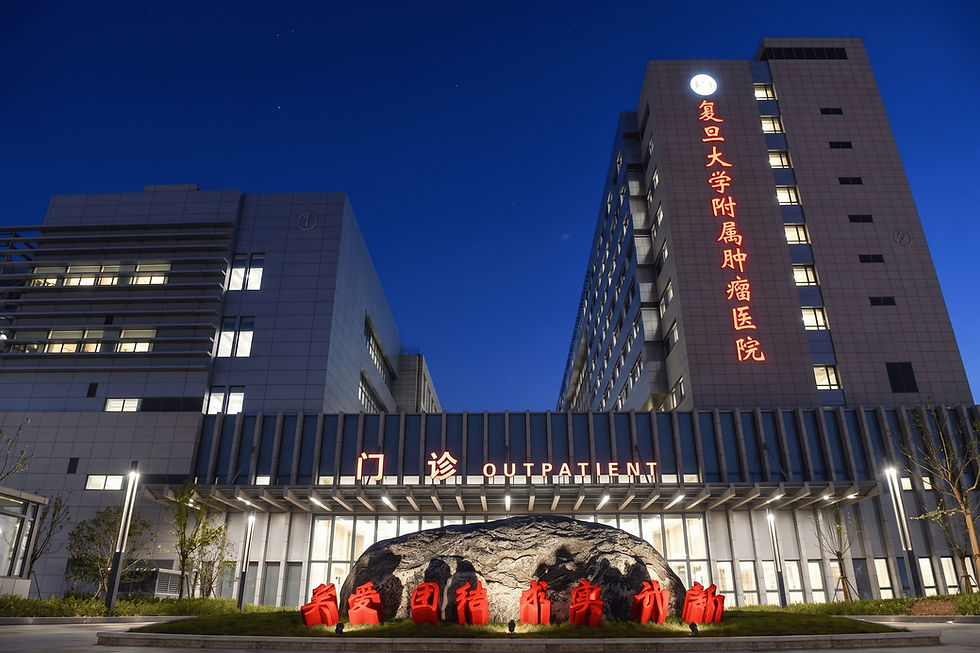
The complex photograph shows Huashan's Hongqiao/West campus clinical medicine center. Confirm the location of the reviewing team and any admission, since the hospital operates across campuses. Request a coordinated plan for pathology, radiation and subsequent medical treatment rather than assessing surgery in isolation.

Professor Jinsong Wu
Chief physician and professor; glioma neurosurgery
Professor Wu's official profile documents work in glioma care, functional imaging and image-guided neurosurgery. His interests include intraoperative MRI, awake procedures and monitoring to support function-conscious tumor surgery. Suitability for these techniques depends on the tumor and the patient's condition.

Professor Ying Mao
Chief physician and professor; neurosurgery
Professor Mao's institutional profile describes clinical and translational work in brain tumors and cerebrovascular disease. He offers relevant neurosurgical expertise within Huashan's broader program. Ask the department which glioma specialists will participate in the individual case review and postoperative plan.
Sun Yat-sen University Cancer Center — Guangzhou

Established in 1964, Sun Yat-sen University Cancer Center combines clinical oncology, research and education. Its neurosurgical department, established in 2000, provides a brain tumor service within a specialist cancer center, making it relevant when surgery needs close coordination with radiation and medical treatment.
The department describes multidisciplinary work involving neurosurgeons, radiation and medical oncologists and pathology specialists. Its documented interests include microsurgery, imaging guidance, molecular assessment and comprehensive care for glioma. These capabilities provide a basis for discussing an integrated plan, not a claim of disease-specific superiority.
Ask how the team will review the diagnosis, assess the balance of surgical benefit and neurological risk, and organize subsequent treatment. Confirm the campus and follow-up arrangements. A proposed targeted or immune treatment needs its own evidence and eligibility explanation; general research activity is not proof that it is appropriate for glioblastoma.

Professor Zhongping Chen
Chief physician and professor; glioma and neurosurgery
Professor Chen's institutional profile describes microsurgery and individualized comprehensive treatment of glioma. His research includes MGMT-related treatment resistance and neuro-oncology. Ask how the pathology and molecular findings would influence an integrated recommendation for the patient's current disease.
Institutional specialist profile

Professor Yonggao Mou
Chief physician; neurosurgery and glioma specialist
Professor Mou is listed by the cancer center as a glioma specialist whose interests include microscopic surgery for nervous system tumors and comprehensive glioma treatment. His work spans clinical care and research. The hospital must confirm his availability and the appropriate reviewing team.
Institutional specialist profile
Get a Second Opinion Before You Fly to China
Request a written review addressing the integrated diagnosis, the feasibility and purpose of further surgery, alternatives, expected burdens and a plan for treatment at home. Include the current neurological symptoms and daily functioning, not only the MRI report. Share the opinion with the existing treating team so that travel and any proposed change fit safely into ongoing care.
The following patient stories and feedback describe general coordination experiences. They are not glioblastoma outcome evidence and do not predict an individual result.
What Patients Say About ChinaCureLink & Medebound HEALTH

FAQs about glioblastoma hospitals in China
Which is the best glioblastoma hospital in China?
There is no verified single best hospital for every patient. Beijing Tiantan Hospital, Huashan Hospital and Sun Yat-sen University Cancer Center are three relevant options for specialist review. Compare the glioma team's assessment of your pathology, scans, neurological function, previous care and follow-up needs rather than relying on a general ranking.
Is CAR-T therapy for glioblastoma available as routine treatment in China?
The 2026 TX103 study in recurrent glioblastoma was a small phase 1 research study, not proof of a cure or routine approved care. Do not assume that publication means a study is recruiting or accepts international patients. Ask the hospital to verify the current protocol, eligibility, regulatory status, risks and costs.
What records are needed for a glioblastoma second opinion in China?
Prepare original DICOM scans, scan reports, surgery and pathology reports, IDH and MGMT results, previous radiation records, drug history and a current medication list. Provide a dated summary and reliable translations. Ask whether tissue slides or blocks are needed and confirm appointment, travel fitness, costs and follow-up before travel.
Prepare your next step
If you are considering a glioblastoma opinion in China, begin with organized records and clear questions. ChinaCureLink can help coordinate communication around an appropriate review. Request written confirmation of the hospital's assessment process, practical arrangements and fees before committing to travel.
Sources and further reading
Glioblastoma clinical practice guideline — Alberta Health Services (September 2026)
Beijing Tiantan Hospital, Capital Medical University — Beijing — institution and department
Huashan Hospital, Fudan University — Shanghai — institution and department
Sun Yat-sen University Cancer Center — Guangzhou — institution and department
Sun Yat-sen University Cancer Center — institutional history
Huashan Hongqiao campus photograph — Shanghai Architectural Design & Research Institute
Professor Yonggao Mou portrait — BrainMed, Webinars with the Masters (May 2026)
Information checked for this draft on October 30, 2026. Clinical practice, services, schedules and trial access can change. Institutional photographs identify the hospital or clinician shown and do not imply a commercial affiliation.
About ChinaCureLink
ChinaCureLink helps patients across the world access the best cancer treatment at China's top hospitals, without the delays, language barriers, and administrative confusion that typically come with seeking care abroad.
We connect patients directly with China's top cancer hospitals, ensuring that from the first case submission through to treatment and follow-up, every step is guided, translated, and coordinated by a team experienced in cross-border patient care.
ChinaCureLink is proudly affiliated with Medebound HEALTH — founded by US physicians, with over 10 years of experience and more than 3,000 patients served worldwide, Medebound HEALTH is recognized by Forbes and it is one of the most trusted patient cross-border concierge service company across North America and the Asia Pacific.
Disclaimer
This article is for informational purposes only and is not medical or financial advice. Treatment eligibility, protocols, and costs vary by individual case — confirm specifics with a coordinator and treating physician before making any decisions.