- Apr 9
- 13 min read
Updated: Jul 14
Introduction: Why Indonesian Patients Seek Treatment Abroad
Indonesia has made significant progress in cancer care infrastructure over the past decade. Hospitals such as RSCM, RS Kanker Dharmais, and several major private hospitals in Jakarta and Surabaya now offer chemotherapy, radiation, and surgical oncology for many cancer types.
However, the gap appears at the level of advanced or complex treatment. Proton beam therapy, CAR-T cell therapy, certain robotic surgery platforms, and access to clinical trials for patients who have not responded to standard treatment — these remain limited or unavailable in most Indonesian centers. Patients who need them, or whose disease has progressed beyond what domestic facilities can manage, look abroad.
Singapore has historically been the primary destination, largely due to geographic proximity, cultural familiarity, and the presence of internationally recognized hospitals. Over the past several years, China has become a second option that more Indonesian families are seriously considering, primarily because costs are lower and because several Chinese hospitals now offer treatments — particularly HIFU and certain CAR-T protocols — that are not widely accessible in Singapore.
→ Read Full Guide: Medical Tourism from Indonesia to China – Costs, Treatments & Patient Guide
Learn about treatment options, estimated costs, travel planning, and what Indonesian patients can expect when seeking medical care in China.
Understanding What "Advanced Cancer Treatment" Refers To
The phrase is used loosely and covers a wide range of procedures and therapies. Before comparing countries, it is worth being specific about what falls under this term.
Radiation therapies beyond standard radiotherapy:
Proton beam therapy — uses protons rather than X-rays to deliver radiation, allowing more precise targeting of tumors while reducing exposure to surrounding tissue. Particularly relevant for brain tumors, head and neck cancers, and pediatric cancers.
Stereotactic radiosurgery (CyberKnife, Gamma Knife) — delivers high-dose, precisely targeted radiation to small or surgically inaccessible tumors, often in the brain or spine.
SBRT (Stereotactic Body Radiotherapy) — similar precision for tumors in the lung, liver, or spine.
Cellular and immunological therapies:
CAR-T cell therapy — a patient's own immune cells are extracted, genetically modified in a laboratory to recognize cancer cells, then reinfused. Currently approved primarily for certain blood cancers (leukemia, lymphoma, multiple myeloma).
Checkpoint immunotherapy (PD-1/PD-L1 inhibitors) — drugs that remove the brakes on the immune system, allowing it to attack cancer. Used across many solid tumor types.

Surgical and ablative procedures:
Robotic-assisted surgery (Da Vinci system) — minimally invasive surgery using robotic arms for greater precision in urological, gynecological, and colorectal cancers.
HIFU (High-Intensity Focused Ultrasound) — uses focused ultrasound waves to heat and destroy tumor tissue without incisions. Used for liver, pancreatic, and prostate tumors.
TACE (Trans-arterial chemoembolization) — delivers chemotherapy directly to liver tumors through the blood vessels feeding them, while blocking blood supply.
Targeted molecular therapy:
Drugs designed to block specific proteins or genetic mutations that drive cancer cell growth. Examples include EGFR inhibitors for lung cancer, HER2 inhibitors for breast cancer, and BCR-ABL inhibitors for leukemia.
Clinical trials:
Formal research studies testing new treatments or combinations. Access to clinical trials can be significant for patients whose cancer has not responded to approved therapies.
The availability, depth of clinical experience, and cost of each of these varies between Singapore and China. That variation is what the rest of this article examines.
Advanced Cancer Treatment in Singapore
Hospitals and Accreditation
Singapore's main oncology institutions are the National Cancer Centre Singapore (NCCS), Singapore General Hospital (SGH), and National University Cancer Institute Singapore (NCIS) in the public sector. On the private side, Mount Elizabeth Hospital, Gleneagles Hospital, and Parkway Cancer Centre are frequently used by international patients.
Several of these hold Joint Commission International (JCI) accreditation, which evaluates hospitals against internationally standardized clinical and safety protocols. Singapore's hospitals are consistently ranked among the highest in Asia in independent assessments of clinical outcomes and infection control.
Multidisciplinary tumor boards — where oncologists, surgeons, radiologists, and pathologists review a case together before deciding on treatment — are standard practice at major Singapore centers.
Technology Available
Singapore offers most established advanced cancer treatments:
Proton beam therapy is available at the National Cancer Centre Singapore and at Parkway
CyberKnife and Gamma Knife radiosurgery are available
Da Vinci robotic surgery is available across major hospitals
PD-1/PD-L1 immunotherapy and most approved targeted therapies are accessible
CAR-T cell therapy is available in limited programs
Clinical trial participation exists through academic partnerships
Singapore's drug regulatory authority (HSA) generally approves medicines in close alignment with the US FDA and European EMA, which means patients have access to a broad range of internationally validated treatments.
Practical Considerations for Indonesian Patients
Singapore is a two-to-three hour flight from most major Indonesian cities. Medical staff at major hospitals speak English, and most educated Indonesian patients and their families are able to communicate in English without difficulty.
Post-treatment follow-up is straightforward to arrange given the proximity, and the short flight distance means family members can travel back and forth more easily than with more distant destinations.
Cost
Singapore is among the most expensive medical destinations in Asia. This reflects the operating environment: high wages, high real estate costs, and the regulatory overhead of a tightly governed healthcare system.
For patients requiring multi-month treatment programs involving several procedures or drug cycles, the cumulative cost is a real concern. A single procedure may be manageable; a six-month course of treatment that includes hospitalization, repeated drug infusions, and follow-up imaging becomes substantially more expensive.
Advanced Cancer Treatment in China
A Note on Variability
China's healthcare system spans an enormous range of institutional quality. When this article refers to treatment in China, it is referring specifically to the top-tier Grade A tertiary hospitals in major cities such as Beijing, Guangzhou, and Shanghai — not to the average across all Chinese medical facilities.
This distinction is important. The experience and outcomes at a leading Chinese cancer center differ meaningfully from what a patient might encounter at a mid-tier provincial hospital. International patients are almost always directed to the former, but it is worth being clear about this from the outset.
Hospitals
The institutions most relevant to Indonesian patients considering treatment in China include:
National Cancer Center (NCC), Beijing — the national referral center for oncology research and complex cases
Fudan University Shanghai Cancer Center — one of the highest-volume cancer hospitals in the world, with a strong published research record
Sun Yat-sen University Cancer Center, Guangzhou — well known for nasopharyngeal carcinoma and liver cancer; sees a large volume of Southeast Asian patients
Peking Union Medical College Hospital, Beijing — JCI accredited, strong in internal medicine oncology and rare tumors
PLA General Hospital (301 Hospital), Beijing — has an established international patient department
Technology Available
China's top centers offer most of the same treatment categories as Singapore, with some differences in depth of experience and availability.
Proton beam therapy is available at multiple dedicated centers. China has invested in proton therapy infrastructure over the past decade and now has operational centers in several major cities.
HIFU has more clinical case volume in China than in Singapore. Several Chinese centers have published outcome data in international journals on HIFU specifically for liver and pancreatic tumors. This does not mean HIFU is the correct treatment for every patient with these diagnoses — that is a clinical judgment — but for patients for whom it is appropriate, China's centers have more accumulated experience with it.
CAR-T cell therapy: China's drug regulator (NMPA) has approved several domestically developed CAR-T products. The number of approved programs and active clinical trials in this area is larger than in Singapore. This means broader access for patients whose blood cancer might qualify, though this is a rapidly evolving field in both countries.
Clinical trials are numerous, in part because large patient volumes allow trials to recruit quickly. For patients with cancers that have not responded to standard treatment, Chinese cancer centers may have active trials that are not running elsewhere.
Targeted therapies and immunotherapy are widely available. Some drugs approved in China may be domestically developed and not available in other countries. Whether these are clinically equivalent to approved agents in Singapore or the United States is a question to discuss with an oncologist who is familiar with both markets — it is not something to assume in either direction.
Accreditation and Quality
Chinese Grade A tertiary hospitals operate under a national accreditation system administered by the National Health Commission. The top-tier hospitals meet standards that are broadly comparable to international benchmarks in clinical practice and patient safety — though the accreditation system itself is different from JCI.
A subset of Chinese hospitals also hold JCI accreditation. Peking Union Medical College Hospital is one example.
Published clinical outcome data from major Chinese cancer centers appears in international oncology journals including The Lancet Oncology and the Journal of Clinical Oncology. This means the clinical work can be reviewed and scrutinized by the international medical community, which is a meaningful indicator of institutional quality.
However, quality verification requires more active effort for a patient choosing China than Singapore. The range of institutional quality across China is wider, and identifying the right hospital for a specific diagnosis requires more research. This is not a reason to avoid China — it is a reason to be thorough.
Language
Medical consultations, hospital records, nursing communication, and informed consent processes in Chinese hospitals take place in Mandarin. This is a straightforward reality that requires advance preparation.
Major cancer centers in Beijing, Guangzhou, and Shanghai that regularly treat international patients have international patient departments, and English-speaking staff are available. Guangzhou, in particular, sees a large number of Southeast Asian patients, and some centers have staff who speak Bahasa Indonesia or can arrange appropriate interpreters.
This is manageable, but it requires planning. The quality of communication during medical decision-making — understanding a treatment recommendation, asking questions about risks, giving informed consent — depends on the quality of interpretation available. Patients and families should not assume this will work itself out on arrival.
This is one area where working with a dedicated patient coordination service makes a concrete difference. China CureLink, for example, handles Bahasa Indonesia interpretation throughout the entire treatment process — from the initial case submission and remote second opinion, through to in-hospital consultations, nursing communication, and informed consent documentation.
Indonesian patients they coordinate for do not navigate hospital communication independently. If language is a primary concern when considering treatment in China, it is worth understanding that this support infrastructure exists and is available before making a decision based on that concern alone.
Technology Comparison
Treatment | Singapore | China (Top-Tier Centers) |
Proton beam therapy | Available | Available, multiple dedicated centers |
CAR-T cell therapy | Available, limited programs | Available, more approved protocols |
Robotic surgery (Da Vinci) | Widely available | Widely available |
CyberKnife / SBRT | Available | Available |
Gamma Knife (brain tumors) | Available | Available |
HIFU | Limited | Available, higher published case volume |
PD-1/PD-L1 immunotherapy | Available (FDA/EMA agents) | Available (incl. domestic agents) |
Targeted molecular therapy | Wide access | Wide access |
TACE (liver tumors) | Available | Available |
Clinical trials | Available | Available, large patient volumes |
JCI-accredited institutions | Yes, at major centers | Yes, at select centers |
The differences between the two countries at the top institutional level are narrower than they are often assumed to be. HIFU availability and CAR-T program breadth are the areas of most meaningful difference.
Cost Comparison
The figures below are estimated ranges based on 2024–2025 hospital and patient data. They are not official price lists. Costs vary depending on a patient's specific treatment protocol, length of stay, and the individual hospital. Request a written cost estimate from the hospital before making any financial commitments.
Estimated Procedure Costs (USD)
Procedure | Singapore | China | Approximate Difference |
Proton beam therapy (full course) | $45,000 – $75,000 | $30,000 – $52,000 | ~25–30% lower in China |
CAR-T cell therapy | $120,000 – $180,000 | $80,000 – $130,000 | ~25–30% lower in China |
Robotic surgery (e.g., prostatectomy) | $18,000 – $30,000 | $12,000 – $22,000 | ~25–30% lower in China |
Gamma Knife radiosurgery | $12,000 – $22,000 | $8,000 – $15,000 | ~25–30% lower in China |
CyberKnife / SBRT | $15,000 – $25,000 | $10,000 – $18,000 | ~25–28% lower in China |
HIFU (liver tumor) | Limited | $8,000 – $18,000 | Not directly comparable |
Immunotherapy cycle (3 months) | $25,000 – $45,000 | $17,000 – $32,000 | ~25–30% lower in China |
Targeted therapy (monthly drug cost) | $3,000 – $8,000 | $2,000 – $5,500 | ~20–30% lower in China |
Staging and diagnostic workup | $3,500 – $6,000 | $1,500 – $3,500 | ~35–50% lower in China |
Private hospital room (per night) | $350 – $800 | $80 – $250 | ~50–70% lower in China |
Across procedure categories, costs at top Chinese hospitals are approximately 25–30% lower than equivalent procedures in Singapore. The difference in hospital accommodation is larger — often 50–70% — because Singapore's real estate costs are among the highest in Asia.
Accommodation and Living Costs
For patients staying abroad over several months, accommodation and daily expenses add considerably to the total financial picture.
In Singapore, a serviced apartment near the main hospital districts costs approximately USD 110–225 per night. Daily food and transport for a patient and one accompanying family member adds roughly USD 60–90 per day.
In Beijing or Guangzhou, a comparable apartment near a major cancer center costs USD 40–80 per night. Daily living expenses for two people run approximately USD 30–55.
Over two months, this difference in accommodation and living costs alone can amount to USD 8,000–15,000, separate from any difference in procedure costs.
How a Medical Facilitator Can Help Indonesian Patients Navigate Treatment in China
One of the most practical barriers for Indonesian patients considering treatment in China is not clinical — it is logistical. Finding the right hospital for a specific cancer type, submitting medical records in a format Chinese hospitals can review, arranging interpretation, coordinating travel, and understanding what each step of the process involves are all tasks that are difficult to manage independently from abroad.
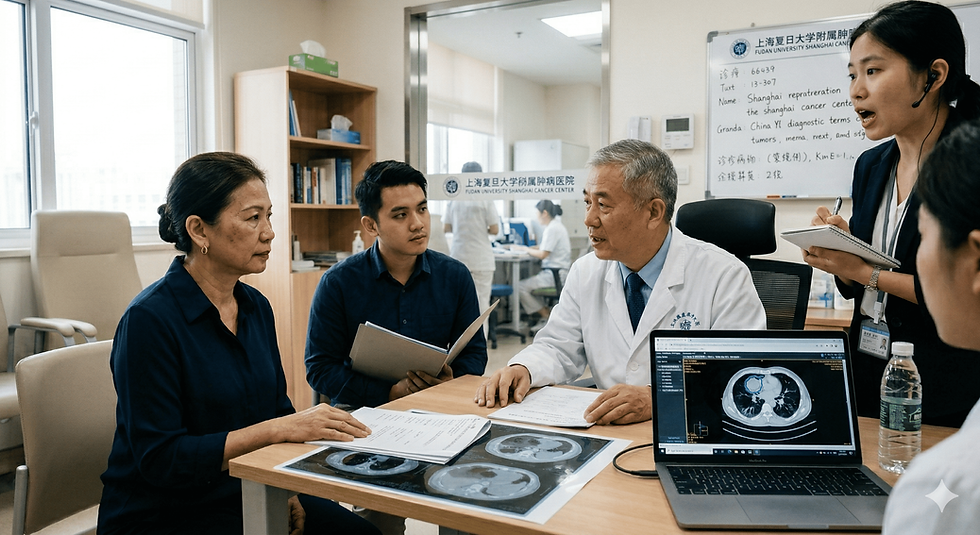
This is where a medical facilitation service becomes relevant.
China CureLink is a patient coordination service that connects Indonesian and other Southeast Asian patients with oncology centers in China. It is affiliated with Medebound HEALTH, an international medical concierge company based in New York with over ten years of experience helping patients access specialist care globally.
What they actually do in practice:
Hospital matching. Not every cancer type is best treated at the same hospital in China. A patient with nasopharyngeal carcinoma has different needs than one with relapsed leukemia requiring CAR-T therapy. China CureLink assesses a patient's diagnosis and treatment history and connects them with the specific institution that has the most relevant specialist experience for that case.
Remote second opinions. Before any travel is arranged, a patient's existing medical records — pathology reports, imaging, prior treatment history — can be submitted to a Chinese specialist tumor board for review. This allows a family to understand what treatment options might be available in China, and whether the clinical picture genuinely warrants the effort of going, before committing to anything. This is often the recommended first step.
Interpretation and communication. All medical communication, documentation, and coordination during treatment is handled with interpretation support. Patients and families do not navigate the language barrier independently.
Travel and accommodation coordination. Visa arrangements, hospital admission logistics, and accommodation near the treatment center are coordinated through the service.
Aftercare and follow-up. After treatment is completed and the patient returns to Indonesia, China CureLink can help coordinate ongoing communication with the treating hospital for follow-up assessments or continued remote monitoring.
For Indonesian patients, this kind of coordination service addresses the most commonly cited reasons for hesitation about treatment in China — the language, the unfamiliarity of the system, and not knowing which hospital is appropriate for a given diagnosis.
It is worth being clear about what a facilitation service is and is not. China CureLink is not a medical provider and does not make clinical decisions. The actual treatment decisions are made by the specialists at the hospital a patient is matched with. What the service provides is the administrative and logistical infrastructure that makes accessing those specialists a manageable process for a family who does not already have contacts in the Chinese healthcare system.
For patients who want to explore this further or submit records for a remote second opinion, more information is available at chinacurelink.com.
How to Think Through This Decision
There is no single correct answer to which country is better for advanced cancer treatment. The appropriate choice depends on a combination of factors that differ for every patient.
The treatment required matters more than the country. If a patient's cancer can be treated with a standard protocol available at high quality in both countries, then cost and logistics become the relevant variables. If one country has substantially more clinical experience with the specific treatment needed — liver cancer management and HIFU in China, for instance — that clinical consideration deserves weight.
Financial sustainability over the full treatment period is a genuine medical consideration, not merely a financial one. A treatment plan that a family cannot sustain financially to completion is a problem that affects clinical outcomes, not only household finances. If the difference in cost between the two countries determines whether a family can complete treatment, that difference is clinically relevant.
Communication during complex medical decisions affects the quality of care. This is worth weighing honestly in both directions — the difficulty of navigating language barriers in China, and the difficulty of navigating an unfamiliar and expensive system in Singapore on a limited budget.
The specific hospital matters more than the country. Verifying the credentials, caseload, and accreditation of the specific institution — not just the country — is the most important due diligence a patient can do.
Summary
Singapore and China are both credible destinations for advanced cancer treatment. Neither should be chosen based on reputation alone, and neither should be dismissed based on it.
Singapore's top hospitals are well-regulated, internationally accredited, and relatively straightforward to navigate for Indonesian patients. The main constraint is cost, which is consistently high and becomes more significant over longer treatment periods.
China's leading cancer centers offer comparable technology for most treatment types. For certain therapies — particularly HIFU for liver and pancreatic tumors, and CAR-T programs for blood cancers — China's top centers have accumulated more clinical experience and offer broader access. Costs are approximately 25–30% lower than equivalent procedures in Singapore, with accommodation costs running 50–70% lower. The main constraints are the language requirement, which requires preparation to manage properly, and the wider institutional variation across Chinese hospitals, which makes choosing the right specific center more important.
For most patients, the decision will come down to the specific treatment required, what the cost difference means for the family's ability to complete the full treatment course, and a realistic assessment of what each logistical environment involves.
Both decisions benefit from consultation with a qualified oncologist who is familiar with what the specific cancer requires — and who has no financial stake in which country is chosen.
This article is for informational purposes only and does not constitute medical advice. Consult a qualified oncologist before making treatment decisions.
→ Read Full Guide: Best Cancer Treatment in Asia
Compare treatment quality, costs, access to advanced therapies, and patient experience to find the best option for your needs.:
About China Curelink
China Curelink helps patients across Southeast Asia — including Indonesia, Malaysia, the Philippines, Vietnam, and Thailand — access the best cancer treatment at China's top hospitals, without the delays, language barriers, and administrative confusion that typically come with seeking care abroad.
We connect patients directly with China's top 5 cancer hospitals, ensuring that from the first case submission through to treatment and follow-up, every step is guided, translated, and coordinated by a team that understands both the medical and cultural needs of Southeast Asian patients.
China Curelink is proudly affiliated with Medebound HEALTH— an international medical concierge company headquartered in New York, specialized in securing premium second opinions from top US hospitals and specialists. With over 10 years of experience and more than 3,000 patients served worldwide, Medebound HEALTH is recognized as one of the leading patient access services across North America and the Asia Pacific, Medebound HEALTH brings the same standard of expert care coordination to every patient we serve.


Comments