Updated: Sep 19
Introduction: The Question Every Indonesian Patient Asks
Receiving a cancer diagnosis is overwhelming. One of the earliest practical decisions patients and families face is whether to seek treatment locally or abroad — and if abroad, where.
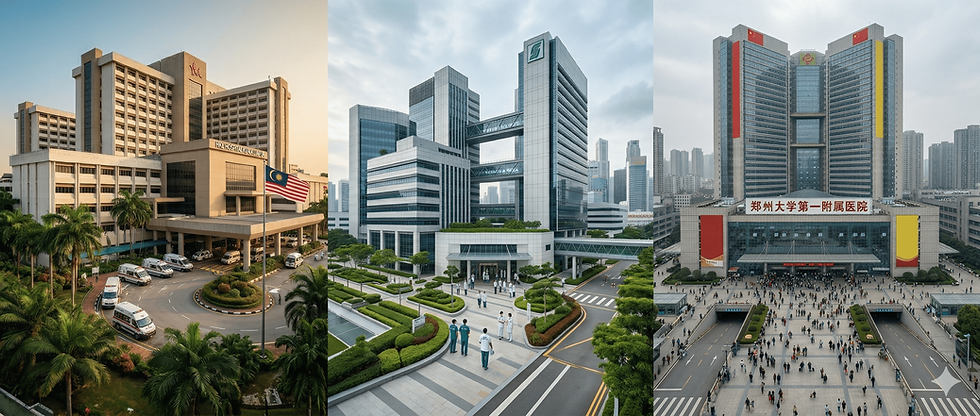
For patients across Indonesia, hospitals in Malaysia, Singapore, and China are the most commonly considered destinations outside their home country to seek the best cancer treatment available. Each has distinct clinical strengths and limitations that are worth understanding before making a decision.
For patients trying to determine where to find the best cancer treatment in Asia, this article provides, this guide compares Malaysia, Singapore, and China across the metrics that matter most: treatment technology, available therapies, cost, specialist access, and real patient outcomes. By the end, you will have a clear framework for making one of the most consequential decisions of your life.
Why Southeast Asian Patients Seek Treatment Abroad
Nearly 1.5 million new cancer cases are diagnosed annually across Southeast Asia, yet most countries in the region still lack the infrastructure for advanced oncological care. Limited availability of subspecialist oncologists, restricted access to newer systemic therapies, and waiting times that can delay care.
The result is a well-established trend: patients with the means to travel seek treatment in countries with higher medical capacity. The three most common destinations are Malaysia, Singapore, and increasingly, China.
Each offers something different. Understanding what each offers — and what each lacks — is the foundation of a smart treatment decision.
→ Read Full Guide: Medical Tourism in China 2026 for Southeast Asian Patients
Learn about treatment planning, travel logistics, costs, and patient support services for medical care in China.
Malaysia: Strengths and Clinical Scope
Clinical Capabilities
Malaysia has invested heavily in private oncology infrastructure over the past two decades. Hospital groups like Gleneagles, Pantai, and Sunway Medical Centre offer solid oncology departments, English-speaking specialists, and costs that sit meaningfully below Singapore. For many Indonesian patients, Kuala Lumpur or Penang feels culturally familiar and logistically easy to reach.
For patients requiring standard first-line treatment protocols — including surgery for solid tumours, conventional chemotherapy regimens, and radiation therapy — Malaysian hospitals can deliver clinically appropriate care. Geographic proximity and a shared cultural and linguistic context with Indonesia make Malaysia a practical consideration for many patients.
Critical Limitations
Malaysia currently has limited access to CAR-T cell therapy (Chimeric Antigen Receptor T-cell therapy) and to several advanced-generation immunotherapy agents. These therapies are not yet widely approved or routinely available in the Malaysian healthcare system.
For patients whose cancer has relapsed, is refractory to standard treatment, or requires therapies beyond conventional chemotherapy and radiation, the range of options available in Malaysia may be insufficient.
Access to formal multidisciplinary tumor boards — structured case review meetings where oncologists, radiologists, pathologists, and surgeons collectively evaluate a patient's case — varies across institutions. Patients are advised to confirm the format of specialist review at any institution they are considering.
In summary: Malaysia is an appropriate option for standard-line oncology treatment, particularly for early-stage cancers. Patients with complex or refractory disease should discuss whether the available treatment options meet their clinical needs.
Singapore: Clinical Standards and Practical Constraints
Clinical Capabilities
Singapore's oncology infrastructure is among the most developed in Southeast Asia. The National Cancer Centre Singapore (NCCS), affiliated with Singapore General Hospital, operates as a dedicated oncology institution and participates in international clinical research. Private institutions including Mount Elizabeth Hospital and Raffles Cancer Centre maintain high clinical standards.
Multidisciplinary tumor boards are standard practice at Singapore's major oncology centers. Singapore's regulatory framework — through the Health Sciences Authority — means that internationally approved drugs are generally available, though approval timelines vary.
For patients who value proximity and a well-regulated healthcare environment, Singapore represents a clinically strong regional option.
Clinical Limitations
The most immediate barrier is cost. A full course of cancer treatment in Singapore — surgery, chemotherapy, targeted therapy, and follow-up — routinely runs into figures that are staggering for most Indonesian families. Even for commercially insured patients, out-of-pocket costs frequently reach hundreds of thousands of Singapore dollars for complex cases.
Beyond cost, Singapore faces the same limitation as Malaysia in a critical area: CAR-T cell therapy and advanced cellular immunotherapies are extremely limited in availability. While Singapore has approved some CAR-T treatments, access is restricted, waiting lists exist, and the full breadth of next-generation immunotherapy protocols available in China's top cancer hospitals simply does not exist here.
Singapore is also constrained by bed capacity and specialist appointment availability. International patients often face wait times of several weeks for initial consultations — weeks that matter enormously in oncology.
In summary: Singapore offers exceptional medical quality but at a cost that is prohibitive for most families, with the same therapy access gaps as Malaysia on the most advanced treatment types.
China: Clinical Capabilities and Relevant Considerations
Why China Has Changed the Equation
This is the part that surprises most Southeast Asian patients — and their families.
China is no longer just a cost-saving alternative. It has become the world's most active arena for cancer immunotherapy development and deployment, with a patient volume and specialist concentration that no other country can match. Understanding why requires a brief look at the numbers.
China sees approximately 4.8 million new cancer cases per year — more than any other country on earth. The resulting investment in oncology infrastructure, specialist training, clinical trial volume, and treatment protocol development is enormous. China's top cancer hospitals — institutions like the Peking Union Medical College Hospital, Fudan University Shanghai Cancer Center, and the Sun Yat-sen University Cancer Center — handle patient volumes and case complexity that most Western cancer centres never see.
This scale has produced something important: deep, practised expertise in the cancers most prevalent in Asia. Nasopharyngeal carcinoma, hepatocellular carcinoma, gastric cancer, lung cancer in non-smokers — the very cancers that disproportionately affect Southeast Asian populations — are treated in China at a volume and with a specialization depth that is genuinely world-class.
→ Read Full Guide: JCI Accredited Hospitals in China and US Hospital Partnerships: A 2026 Trust Guide for International Patients
CAR-T Cell Therapy and Immunotherapy: China's Exclusive Advantage
This is the most critical differentiator that most patients don't know about.
CAR-T cell therapy (Chimeric Antigen Receptor T-cell therapy) is one of the most significant breakthroughs in cancer treatment in decades. In this treatment, a patient's own immune cells are collected, genetically engineered to recognise and attack cancer cells, then reinfused. Results in blood cancers — certain leukemia, lymphomas, and multiple myeloma — have been remarkable, achieving remissions in patients who had failed every other treatment.
China is home to the world's largest CAR-T clinical program, with multiple approved products and ongoing next-generation trials. Major hospitals in Beijing and Shanghai administer CAR-T therapy routinely, with experience measured in thousands of patients.
This is not currently replicated in Malaysia or Singapore, where CAR-T availability remains limited or in early stages.
Beyond CAR-T, China's top oncology centers offer advanced PD-1/PD-L1 immunotherapy combinations, specific antibody therapies, targeted radiotherapy protocols, and access to clinical trials for novel agents that aren't available anywhere else in Asia.
It is important to note that not all cancer patients require or are eligible for these advanced therapies. A patient's suitability for CAR-T, immunotherapy combinations, or clinical trial enrolment depends on tumour type, disease stage, prior treatment history, performance status, and molecular profiling. These questions should be discussed with a qualified oncologist.
→ Read Full Guide: Yescarta vs. Kymriah vs. Carvykti and other alternatives : Which CAR T Therapy Is Best for Your Cancer?
Practical Considerations for International Patients
The most commonly raised concern among Southeast Asian patients is the language barrier. China's major cancer hospitals with international patient programs provide medical interpreter services and have international liaison staff. Medical coordination services specifically serving Southeast Asian patients are also available and can assist with translation, logistics, and treatment coordination.
Travel time from major Indonesian cities (Jakarta, Surabaya) to Beijing, Shanghai, or Guangzhou is comparable to travel time to Singapore in many cases.
Clinical summary: China's leading oncology centers offer the broadest range of advanced cancer therapies currently available in Asia, including CAR-T cell therapy and an active clinical trial environment. The clinical benefit for any individual patient depends on their diagnosis, stage, and treatment history. Patients should obtain a specialist assessment before drawing conclusions about whether these options are clinically applicable to their situation.
Real Patient Case: Kidney Cancer — Second Opinion Changes Everything
One Indonesian patient with kidney cancer had already seen specialists in their home country and was considering treatment in Singapore. Before committing, they sought a second opinion from a top-tier hospital in China. The specialist review — conducted by a multidisciplinary tumor board — identified a targeted therapy pathway that had not been offered elsewhere and recommended a protocol that the patient's prior oncologists had not considered.
The outcome and the full case details are documented here: Kidney Cancer Second Opinion — Indonesian Patient Treatment at China's Top Hospital This case illustrates something important: a second opinion at the right institution can entirely change the treatment pathway available to you.
The Cost Advantage: 50–85% Lower Than Western Countries
For Southeast Asian families navigating cancer treatment, cost is not a secondary concern — it is often the determining factor.
China's top cancer hospitals offer treatment at costs that are 50 to 85 percent lower than equivalent treatment in the United States or Western Europe — while delivering care that meets or exceeds international standards for many advanced cancer types.
Even compared to Singapore, China's top hospitals frequently represent significant savings, particularly for complex, multi-line treatment courses and for cellular therapies like CAR-T that carry enormous price tags in Western markets.
This is not a trade-off between quality and cost. China's leading oncology institutions are equipped with the same imaging technology (PET-CT, 3T MRI), the same surgical systems (robotic surgery), and in many cases more clinical trial access than their regional counterparts. The cost difference reflects economic context, not quality gap.
Clinical Comparison: Best Cancer Treatment Options in Asia
Factor | Malaysia | Singapore | China (Top Hospitals) |
Standard oncology protocols | ✅ Good | ✅ Excellent | ✅ Excellent |
Multidisciplinary tumor boards | ⚠️ Variable | ✅ Standard | ✅ Standard |
CAR-T cell therapy | ❌ Not available | ⚠️ Very limited | ✅ Widely available |
Advanced immunotherapy | ⚠️ Limited | ⚠️ Limited | ✅ Extensive |
Clinical trial access | ⚠️ Limited | ⚠️ Moderate | ✅ World's largest volume |
Specialist experience in Asia-prevalent cancers | ⚠️ Moderate | ✅ Good | ✅ Highest volume globally |
Cost vs. Western countries | ✅ ~30–40% lower | ⚠️ ~10–20% lower | ✅ 50–85% lower |
English-language support | ✅ Strong | ✅ Strong | ✅ Available (with assistance) |
Wait time for consultation | ⚠️ 1–3 weeks | ⚠️ 2–4 weeks | ✅ Often within days |
What Cancer Types Benefit Most from Treatment in China?
The following cancer types and clinical situations are ones where the clinical capabilities at China's leading centers are particularly relevant. This does not mean that treatment in China is the only or automatically the correct option — it means that specialist input from a high-volume center is worth seeking.
Blood cancers (leukemia, lymphoma, multiple myeloma): CAR-T cell therapy access makes China the strongest option for relapsed or refractory cases by a significant margin.
→ Read Full Guide: CAR-T Therapy Cost in China for Lymphoma 2026 – International Patient Guide
This detailed guide covers exact pricing, what's included in treatment packages, and real patient timelines.
→ Read Full Guide: CAR-T Therapy in China for Multiple Myeloma 2026 – Complete Patient Guide
Discover myeloma-specific treatment protocols, cost breakdowns, and eligibility requirements.
→ Read Full Guide: Relapsed Refractory Leukemia CAR-T Therapy in China – Complete Overview
Learn about leukemia-specific CAR-T protocols and survival outcome data.
This detailed guide covers exact pricing, what's included in treatment packages, and real patient timelines.
Lung cancer: China has the world's highest volume of lung cancer cases and the deepest expertise in targeted therapy and immunotherapy combinations, including for the EGFR, ALK, and ROS1 mutations common in Asian non-smoker populations.
Liver cancer (hepatocellular carcinoma): Extremely high specialist experience volume, advanced interventional radiology options, and combination immunotherapy protocols.
Nasopharyngeal carcinoma: A cancer that disproportionately affects Southeast Asian populations and is treated in China with a frequency and expertise level that no other country matches.
Gastric and colorectal cancer: High-volume specialist experience, advanced surgical techniques, and access to combination immunotherapy protocols.
Any cancer that has relapsed or stopped responding to first-line treatment: This is where China's clinical trial access and CAR-T capability become most decisive.
Steps to Getting Treatment in China as an Indonesian Patient
The Clinical Role of a Specialist Second Opinion
One of the most underutilized tools in cancer care is the specialist second opinion — and this is especially true for patients considering treatment abroad.
Many Indonesian patients arrive at a treatment decision based on a single oncologist's assessment at a local hospital. A second opinion from a multidisciplinary tumor board at a high-volume specialist center frequently reveals additional options: a different drug combination, an eligibility for a clinical trial, a different surgical approach, or — as in the kidney cancer case documented above — an entirely different treatment pathway.
This is not a criticism of local physicians. It reflects the reality that cancer medicine is deeply specialized, that rare tumor types or complex genomic profiles require concentrated expertise, and that the volume of cases a specialist sees directly correlates with the breadth of their treatment knowledge.
Before committing to a treatment plan — regardless of where treatment will ultimately take place — patients with complex or rare cancers are encouraged to seek a formal specialist second opinion. This can often be done remotely, based on submitted pathology reports and imaging, before any travel is considered.
Frequently Asked Questions
Is cancer treatment in China safe for international patients?
China's top-tier hospitals — those affiliated with major universities in Beijing, Shanghai, and Guangzhou — operate to internationally benchmarked standards. Many have international patient departments specifically designed to serve Southeast Asian, Middle Eastern, and Western patients, with translation support and coordinated care pathways.
Can I get a second opinion from a China hospital before deciding where to treat?
Yes. Most of China's major cancer hospitals offer remote second opinion consultations based on pathology reports, imaging studies, and treatment history submitted digitally. This is often the recommended first step for international patients before committing to travel.
How do I verify the quality of a specific Chinese hospital?
Look for affiliations with major Chinese medical universities (Peking Union, Fudan, Sun Yat-sen), national designations as a "National Cancer Center" or equivalent, and volume data on the specific cancer type you are dealing with. Medical facilitators who specialize in connecting Southeast Asian patients with Chinese hospitals can provide this verification.
Conclusion: Choosing the Best Cancer Treatment for Your Situation in Asia
No single destination is the right answer for all cancer patients. What constitutes the best cancer treatment option depends on the individual clinical situation — tumor type, disease stage, treatment history, and which therapies are clinically indicated.
Malaysia offers cost-accessible standard oncology care. Singapore offers world-class standards with significant cost and access limitations. China's top cancer hospitals offer the most advanced therapy options available anywhere in Asia — including therapies like CAR-T that do not exist in meaningful form in the other two countries — at a cost that is 50 to 85 percent below Western equivalents.
For patients dealing with complex, advanced, or relapsed cancers, the evidence points clearly toward seeking care — or at minimum a specialist second opinion — at one of China's leading oncology institutions.
The decision is yours. But it should be made with complete information about what is available — and what is not — in each destination.
If you or a family member is navigating a cancer diagnosis and considering treatment options across Asia, a specialist second opinion from a top Chinese cancer hospital can be arranged remotely before any travel decisions are made.
About China Curelink
China Curelink helps patients across Southeast Asia — including Indonesia, Malaysia, the Philippines, Vietnam, and Thailand — access the best cancer treatment at China's top hospitals, without the delays, language barriers, and administrative confusion that typically come with seeking care abroad.
We connect patients directly with China's top 5 cancer hospitals, ensuring that from the first case submission through to treatment and follow-up, every step is guided, translated, and coordinated by a team that understands both the medical and cultural needs of Southeast Asian patients.
China Curelink is proudly affiliated with Medebound HEALTH— an international medical concierge company headquartered in New York, specialized in securing premium second opinions from top US hospitals and specialists. With over 10 years of experience and more than 3,000 patients served worldwide, Medebound HEALTH is recognized as one of the leading patient access services across North America and the Asia Pacific, Medebound HEALTH brings the same standard of expert care coordination to every patient we serve.
