
- 16 hours ago
- 13 min read
Introduction
CAR-T cell therapy has become one of the most important developments in the treatment of blood cancers. It is now used for selected patients with relapsed or refractory leukemia, lymphoma, and multiple myeloma, while researchers are investigating new CAR-T approaches for additional cancers and diseases.
The United States was the first country to bring CAR-T therapy into routine clinical practice, but it is no longer the only major center of CAR-T development. China has built a large clinical and research ecosystem, while hospitals in the United Kingdom, Germany, Israel, and other countries have developed their own CAR-T programs and clinical trials.
For patients searching for the best CAR-T hospitals in the world, however, there is an important distinction:
The best CAR-T hospital for one patient may not be the best hospital for another.
A patient with relapsed B-cell lymphoma may need a different center from a patient with T-cell leukemia or multiple myeloma. Some hospitals are particularly strong in approved CAR-T treatments, while others are more relevant for experimental therapies, novel targets, or CAR-T combined with transplantation.
This guide compares leading CAR-T centers around the world based on their clinical programs, research activity, experience with cellular therapy, and areas of specialization.
Key Takeaways |
Leading CAR-T hospitals are concentrated in the United States, China, and several major cancer centers across Europe and Asia. |
The strongest centers differ in their areas of expertise, including leukemia, lymphoma, multiple myeloma, T-cell malignancies, and next-generation CAR-T research. |
Major academic centers such as University of Pennsylvania, MSK, MD Anderson, and City of Hope have played important roles in CAR-T development and clinical treatment. |
China has become an important destination for CAR-T treatment and research, with specialist centers including Lu Daopei Hospital and the First Affiliated Hospital of Zhejiang University School of Medicine. |
Some hospitals focus primarily on approved CAR-T treatments, while others have extensive clinical-trial and experimental CAR-T programs. |
For international patients, the most appropriate hospital depends on the cancer type, previous treatments, CAR-T target, disease status, and eligibility, rather than the hospital's overall reputation alone. |
How Were These CAR-T Hospitals Selected?
There is no official worldwide ranking that determines which hospital is "the best" for CAR-T. Instead, leading CAR-T centers can be identified by looking at several clinically relevant factors:
Experience treating hematological malignancies
CAR-T treatment volume
Published clinical research
Number and diversity of CAR-T targets
Access to approved CAR-T products
Clinical-trial activity
Development of investigator-developed CAR-T therapies
Experience managing CRS and ICANS
Hematopoietic stem-cell transplantation capabilities
Cell manufacturing and laboratory infrastructure
Research into next-generation CAR-T
Experience with difficult or relapsed disease
This approach also explains why the list below includes hospitals that are strong in different areas.
1. University of Pennsylvania — Philadelphia, United States
The University of Pennsylvania is one of the institutions most closely associated with the development of modern CAR-T therapy. Researchers at Penn, working with Children's Hospital of Philadelphia and Novartis, developed the CAR-T therapy that became tisagenlecleucel (Kymriah).
In August 2017, the U.S. FDA approved Kymriah for certain children and young adults with relapsed or refractory B-cell acute lymphoblastic leukemia. It was the first FDA-approved CAR-T therapy.
Penn's role did not end with the first approval. In 2026, Penn reported that its physician-scientists had performed more than 760 CAR-T infusions since treating their first patient and continued to conduct research aimed at improving CAR-T efficacy, durability, and toxicity management.
CAR-T areas of interest
B-cell acute lymphoblastic leukemia
B-cell lymphoma
CAR-T clinical development
Cellular immunotherapy
Next-generation CAR-T research
CAR-T toxicity management

Why Penn is important
Penn is particularly important from a historical and scientific perspective because its researchers helped establish CAR-T as a clinically viable cancer treatment.
For patients interested in the development of CAR-T and access to a major academic cellular-immunotherapy program, Penn remains one of the world's important centers.
2. Memorial Sloan Kettering Cancer Center — New York, United States
Memorial Sloan Kettering Cancer Center (MSK) operates a dedicated Cellular Therapeutics Center focused on adoptive cellular therapies.
Its program combines laboratory research, clinical treatment, and clinical trials. MSK researchers work on CAR-T approaches for both hematological malignancies and solid tumors, including the development of new CAR vectors, combination therapies, and approaches intended to overcome treatment resistance.
The center also maintains multiple CAR-T clinical trials covering leukemia, lymphoma, and other malignancies.
CAR-T areas of interest
Leukemia
B-cell lymphoma
Hematological malignancies
Solid-tumor CAR-T research
Novel CAR constructs
Combination therapies
Clinical trials
Why MSK is important
MSK is particularly relevant for patients who are interested in clinical trials and next-generation CAR-T approaches, rather than only established commercial products. The center's research program is closely integrated with patient treatment, allowing new cellular therapies to move from laboratory research into clinical investigation.
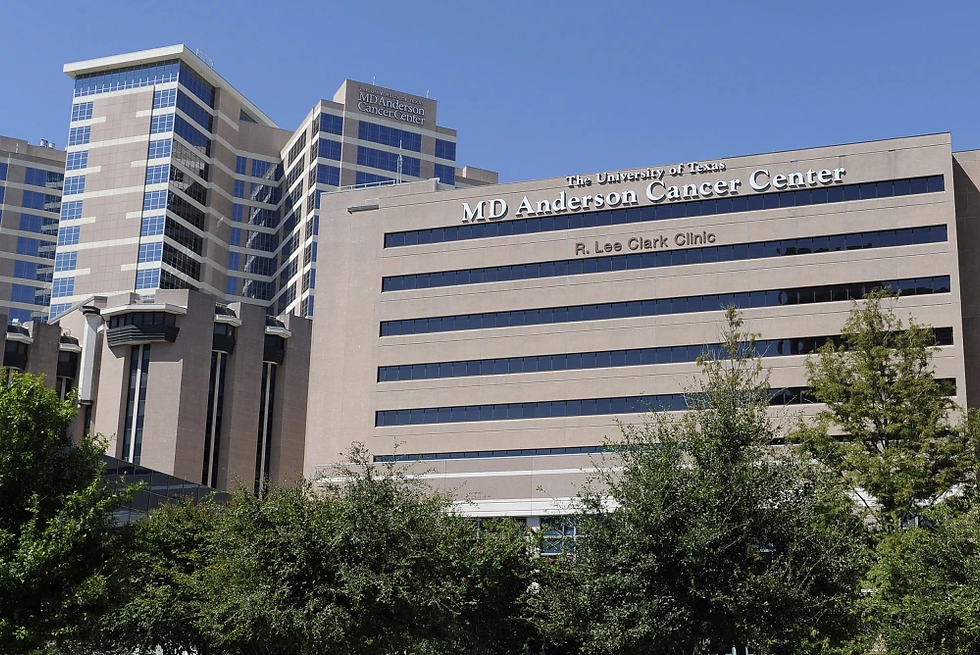
3. MD Anderson Cancer Center — Houston, United States
MD Anderson Cancer Center has one of the largest and most active transplant and cellular-therapy programs in the United States.
Its CAR-T program is supported by the CARTOX Program, which oversees the care of patients receiving CAR-T therapy and focuses specifically on the management of immune-effector-cell toxicities.
MD Anderson states that its CARTOX program was the first standalone immune-effector cellular therapy program to receive accreditation from the Foundation for the Accreditation of Cellular Therapy.
Its Cell Therapy Laboratory also supports standard-of-care cellular therapies, investigator-initiated studies, commercial clinical trials, and cell manufacturing. The laboratory reported more than 1,900 infusions in 2024 across its cell-therapy activities.
CAR-T areas of interest
Leukemia
Lymphoma
Multiple myeloma
Cellular therapy
CAR-T clinical trials
CAR-T toxicity management
Cell manufacturing
Next-generation therapies
Why MD Anderson is important
CAR-T is not simply about administering the cells. Patients can develop potentially severe complications, including cytokine release syndrome and neurotoxicity. A center with extensive cellular-therapy infrastructure, intensive-care support, transplantation experience, and dedicated toxicity-management expertise can therefore be particularly important for medically complex patients.
4. City of Hope — California, United States
City of Hope has one of the most comprehensive CAR-T research and treatment programs in the United States.
Its program combines:
CAR-T research
Clinical trials
Cell manufacturing
Quality assurance
Clinical treatment
City of Hope states that its research includes CAR-T programs across hematological cancers and solid tumors and that it maintains clinical-care, research, and manufacturing facilities on the same campus.
The institution has also conducted notable research into CAR-T for brain tumors, an area where CAR-T remains investigational rather than standard treatment.
CAR-T areas of interest
Leukemia
Lymphoma
Multiple myeloma
Brain tumors
Solid-tumor CAR-T research
Clinical trials
Cell manufacturing
Why City of Hope is important
City of Hope is particularly relevant for patients interested in experimental CAR-T research beyond conventional blood-cancer indications.
Patients should distinguish carefully between approved CAR-T treatment and experimental clinical trials. A promising research program does not mean that an investigational therapy is available to every patient.
5. Lu Daopei Hospital — China
Lu Daopei Hospital is one of the major specialist hematology centers in China and is particularly focused on leukemia, lymphoma, multiple myeloma, hematopoietic stem-cell transplantation, and cellular therapy.
The hospital began CAR-T clinical trials in 2015 and reports that it has treated more than 2,000 patients with CAR-T therapy since then. Its program includes several CAR-T targets, including CD19, CD22, BCMA, and CD7.
One of the areas that makes Lu Daopei particularly relevant is CD7-targeted CAR-T for T-cell malignancies.
T-cell leukemia and lymphoma present different challenges from B-cell malignancies, and CD7-directed CAR-T is an important area of research for patients with relapsed or refractory T-cell disease.

Lu Daopei also has extensive hematopoietic stem-cell transplantation expertise. This allows CAR-T to be considered as part of a broader treatment strategy for selected patients rather than as an isolated treatment.
CAR-T areas of interest
B-cell acute lymphoblastic leukemia
B-cell lymphoma
T-cell acute lymphoblastic leukemia
T-cell lymphoma
Multiple myeloma
CD19 CAR-T
CD22 CAR-T
BCMA CAR-T
CD7 CAR-T
CAR-T followed by transplantation
Why Lu Daopei is important
Lu Daopei is particularly worth considering for complex hematological malignancies, especially cases involving T-cell disease, previous transplantation, relapsed disease, or the need to integrate CAR-T with a broader transplant strategy.
6. First Affiliated Hospital of Zhejiang University School of Medicine — Hangzhou, China
The First Affiliated Hospital of Zhejiang University School of Medicine (FAHZU) is another major Chinese center with significant CAR-T and hematopoietic-transplant research.
Its Bone Marrow Transplantation Center and Institute of Hematology have published clinical research involving CAR-T in acute lymphoblastic leukemia, lymphoma, and multiple myeloma.
The center has investigated multiple CAR-T targets and approaches, including CD19, CD22, BCMA, CD7, and GPRC5D. Research has included sequential CD19/CD22 CAR-T for relapsed/refractory adult B-ALL and CD7 CAR-T approaches combined with hematopoietic stem-cell transplantation.

Research involving BCMA and GPRC5D also places Zhejiang University among institutions working on newer CAR-T approaches for multiple myeloma.
CAR-T areas of interest
B-cell acute lymphoblastic leukemia
B-cell lymphoma
Multiple myeloma
T-cell malignancies
CD19 CAR-T
CD22 CAR-T
BCMA CAR-T
CD7 CAR-T
GPRC5D-related approaches
CAR-T and transplantation
Next-generation CAR-T research
Why FAHZU is important
FAHZU is particularly interesting for patients whose treatment requires more than a standard single-target CAR-T approach.
Its research covers multiple targets and includes CAR-T strategies integrated with transplantation.
For patients with relapsed or refractory disease, this can make the center worth considering alongside other major Chinese CAR-T programs.
7. University College London Hospitals — London, United Kingdom
University College London Hospitals (UCLH) is one of Europe's major cellular-therapy centers. UCLH reports that it has offered CAR-T therapy since 2016 and has treated hundreds of patients through both approved therapies and clinical trials. Its current program includes several licensed CAR-T products, including axicabtagene ciloleucel, tisagenlecleucel, brexucabtagene autoleucel, and lisocabtagene maraleucel.
UCLH and UCL have also played an important role in developing newer CAR-T therapy for B-cell acute lymphoblastic leukemia.

The FELIX trial evaluated obecabtagene autoleucel (obe-cel), a CAR-T approach developed through UCL research and clinical trials at UCLH. The therapy was subsequently approved for routine NHS use in adults with relapsed or refractory B-ALL. UCLH is also investigating CAR-T for diseases outside conventional blood-cancer indications, including severe lupus and light-chain amyloidosis.
CAR-T areas of interest
B-cell acute lymphoblastic leukemia
B-cell lymphoma
Licensed CAR-T therapy
CAR-T clinical trials
Amyloidosis research
Autoimmune-disease CAR-T research
Next-generation CAR-T
Why UCLH is important
UCLH is particularly relevant for patients interested in European CAR-T research and newer cellular therapies.
Its experience also illustrates how CAR-T is moving beyond its original use in leukemia and lymphoma into other diseases, although many of these applications remain experimental.
8. Heidelberg University Hospital — Heidelberg, Germany
Heidelberg University Hospital has a long history in hematopoietic stem-cell transplantation and cellular immunotherapy.
The hospital describes its stem-cell transplantation program as one of the established programs in Germany and states that CAR-T therapy has been integrated into its cellular-therapy infrastructure. It currently offers CAR-T therapy for acute leukemia and lymphoma.
Heidelberg has also contributed to the clinical development of academic CAR-T products in Germany.
Recent work from Heidelberg researchers includes research into CAR-T manufacturing, patient factors affecting CAR-T cell collection and treatment response, and academic CAR-T products for diseases where commercial products may not yet cover the relevant indication.

CAR-T areas of interest
Acute leukemia
Lymphoma
Hematopoietic stem-cell transplantation
Academic CAR-T development
CAR-T manufacturing
Cellular immunotherapy research
Why Heidelberg is important
Heidelberg is particularly relevant for patients who need a center combining CAR-T with deep transplantation and hematology expertise.
It is also an example of Europe's contribution to academic and investigator-developed CAR-T therapies.
Comparing Leading CAR-T Hospitals Around the World
Hospital | Country | Particularly relevant areas | Approx. CAR-T cost* |
University of Pennsylvania | USA | CAR-T development, B-ALL, lymphoma, cellular immunotherapy | US$400,000–700,000+ |
Memorial Sloan Kettering Cancer Center | USA | Leukemia, lymphoma, CAR-T research, clinical trials | US$400,000–700,000+ |
MD Anderson Cancer Center | USA | Leukemia, lymphoma, myeloma, cellular therapy | US$400,000–700,000+ |
City of Hope | USA | Hematological cancers, myeloma, solid-tumor CAR-T research | US$400,000–700,000+ |
Lu Daopei Hospital | China | Leukemia, lymphoma, myeloma, CD7 CAR-T, CAR-T + transplantation | ~US$100,000–150,000+ |
First Affiliated Hospital of Zhejiang University School of Medicine | China | Leukemia, lymphoma, myeloma, multiple CAR-T targets | ~US$90,000–180,000+ |
UCLH | UK | B-ALL, lymphoma, licensed CAR-T, clinical trials | ~US$300,000–400,000* |
Heidelberg University Hospital | Germany | Leukemia, lymphoma, transplantation, academic CAR-T | ~US$300,000–400,000* |
Approved CAR-T vs. Clinical Trial CAR-T
One of the most important distinctions patients should understand is the difference between an approved CAR-T treatment and an investigational CAR-T therapy.
An approved product has passed the relevant regulatory review for specific indications. A clinical-trial CAR-T may involve:
A new target
A new CAR design
A dual-target construct
An allogeneic or donor-derived product
A new manufacturing method
A new cancer indication
Clinical trials can be important for patients who have exhausted standard options, but participation requires meeting specific eligibility criteria. A hospital conducting a large number of CAR-T trials does not mean that every patient will qualify for one.
Why CAR-T Hospital Experience Matters
CAR-T treatment is not simply an infusion.
The treatment pathway can include:
Medical-record and eligibility assessment
Target-antigen testing
T-cell collection through leukapheresis
CAR-T cell manufacturing
Bridging therapy when necessary
Lymphodepleting chemotherapy
CAR-T infusion
Monitoring for cytokine release syndrome
Monitoring for ICANS and other neurological complications
Infection prevention and treatment
Disease-response assessment
Long-term follow-up
The patient may therefore spend several weeks or longer in close contact with the treating center. This is why hospital infrastructure matters.
Should You Travel to Another Country for CAR-T Before Getting a Second Opinion?
Usually, it is better to have the case reviewed before traveling. CAR-T treatment involves significant preparation, and international travel adds additional complexity.
A remote specialist review can help determine:
Whether CAR-T may be appropriate
Which target may be relevant
Whether an approved product is available
Whether a clinical trial may be appropriate
Whether another treatment should be given first
Whether transplantation should be considered
Which hospital is most relevant to the case
Only after these questions are addressed does it make sense to seriously consider international travel.
How ChinaCureLink Can Help Compare CAR-T Options
For an international patient, finding a CAR-T hospital is not simply a matter of choosing the hospital with the biggest name. The patient needs to identify the center whose specific expertise matches the disease and treatment history.
ChinaCureLink provides oncology second opinions and hospital matching in China, including coordination of medical records, specialist consultations, hospital selection, and international treatment logistics.
For patients specifically researching CAR-T, ChinaCureLink's CAR-T treatment guide for international patients explains CAR-T options, eligibility considerations, and the treatment landscape in China.
Its step-by-step guide to getting CAR-T in China explains the practical process from medical-record submission through specialist evaluation and treatment coordination.
Get a CAR-T Second Opinion Before Choosing a Hospital
If you are comparing CAR-T hospitals around the world, you do not necessarily need to choose one immediately.
A more useful first step is to have your case reviewed by specialists who can determine which treatment centers are actually relevant to your disease.
Depending on the diagnosis and treatment history, the review can help determine which specialist center should be considered.
The specialist can discuss:
Whether CAR-T is appropriate
Which CAR-T target may be relevant
Whether an approved product or clinical trial may be appropriate
Whether additional testing is required
Whether bridging therapy may be needed
Whether transplantation should be considered
What alternative treatment options remain
For suitable cases, ChinaCureLink can then coordinate an online consultation with the specialist to discuss the technical treatment details directly. The purpose is to help the patient understand which treatment option and which specialist center may be most appropriate before making an international treatment decision.
What Patients Say About ChinaCureLink & Medebound HEALTH

China CureLink operates under Medebound HEALTH — an internationally recognized healthcare navigation company incorporated in New York, with operations across North America and Asia-Pacific.
Rated 4.6 ⭐⭐⭐⭐⭐ at Trustpilot
Medebound HEALTH's online testimonials. Learn More
★★★★☆ Sarah Zhang · Canada· Jul 2024 · Verified “The interpreter during the video call was fantastic — super professional and answered all our questions clearly and quickly. The professor was also very patient and gave us detailed and honest guidance on our treatment options.” |
★★★★★ Andrew Goh · Singapore · Aug 2024 · Verified “My first contact with Medebound was over a year ago. Jason has always been responsive, even when I wasn't ready to proceed. When I finally did, the consultation was seamlessly arranged and the specialist was outstanding.” |
★★★★★ Daniel Wong · Singapore · Aug 2024 · Verified “I have dry eye and nothing seemed to be working, even with different medications. I heard about a medication from the U.S. that’s supposed to be really effective, but I didn’t want to try it without talking to a doctor first. MEDEBOUND connected me with a top ophthalmologist in the U.S. and it was so reassuring to get their expert advice.” |
★★★★☆ Pongsakorn · Thailand · Feb 2025 · Verified “Kiki at Medebound is amazing — so professional and helpful! They got my video consultation with an MD Anderson expert set up super fast, within just 5 working days. I am so grateful for their support.” |
Frequently Asked Questions
What is the best CAR-T hospital in the world?
There is no single hospital that is best for every CAR-T patient.
University of Pennsylvania, Memorial Sloan Kettering, MD Anderson, City of Hope, Lu Daopei Hospital, FAHZU, UCLH, Heidelberg University Hospital, and Hadassah are among the major centers with significant CAR-T treatment or research programs. The most appropriate center depends on the patient's cancer and treatment history.
Which country is the world leader in CAR-T therapy?
The United States and China are both major centers of CAR-T development and treatment, although they have different strengths. The United States has played a foundational role in developing and commercializing CAR-T, while China has built a large clinical-trial ecosystem and has become particularly active in next-generation CAR-T research. Other countries, including the United Kingdom, Germany, Israel, South Korea, and Japan, also have important CAR-T programs.
Which CAR-T hospitals are best for T-cell leukemia?
T-cell malignancies require specialized expertise because many potential CAR-T targets are also expressed on normal T cells. Lu Daopei and FAHZU are among the centers worth evaluating for CD7-targeted CAR-T approaches, although eligibility must be determined individually.
Which CAR-T hospitals are best for multiple myeloma?
Major centers in the United States, China, Israel, and Europe offer or research CAR-T for multiple myeloma. For patients who have progressed after BCMA-directed therapy, centers researching newer targets such as GPRC5D may be particularly relevant.
Is CAR-T available for solid tumors?
CAR-T is established primarily for certain blood cancers. CAR-T for solid tumors remains largely investigational, although centers such as City of Hope and UCLH are conducting research in this area.
Patients should be cautious of any clinic presenting experimental solid-tumor CAR-T as an established treatment.
Can international patients receive CAR-T treatment?
Potentially, but eligibility depends on the hospital, treatment, regulatory requirements, disease status, and medical condition. A hospital offering CAR-T does not mean that every international patient will qualify.
Should I choose a CAR-T hospital based on its response rate?
No. Response rates from different studies cannot be compared directly without considering the patient population, cancer subtype, treatment line, CAR-T construct, eligibility criteria, and length of follow-up. A response rate reported in a clinical trial is not a prediction of an individual patient's outcome.
What is the best first step if I am considering CAR-T abroad?
Start with a specialist review of your medical records. The purpose is to determine whether CAR-T is potentially appropriate, which targets may be relevant, which hospitals have the most relevant experience, and whether traveling for treatment is medically worthwhile.
Conclusion
The most important factor to choose the best CAR-T hospital is whether the center has the right expertise for your specific cancer, treatment history, CAR-T target, and clinical situation. The United States remains a major center for CAR-T development and treatment. China has developed an extensive CAR-T ecosystem with major specialist centers such as Lu Daopei Hospital and the First Affiliated Hospital of Zhejiang University School of Medicine. Europe and Israel also have important clinical and research programs.
For an international patient, the decision should ideally begin with a medical-record review rather than a plane ticket. ChinaCureLink can help connect suitable patients with specialist CAR-T physicians in China from top 5 leading centers, for a second opinion before treatment and travel decisions are made.
About ChinaCureLink
ChinaCureLink helps patients across the world access the best cancer treatment at China's top hospitals, without the delays, language barriers, and administrative confusion that typically come with seeking care abroad.
We connect patients directly with China's top cancer hospitals, ensuring that from the first case submission through to treatment and follow-up, every step is guided, translated, and coordinated by a team experienced in cross-border patient care.
ChinaCureLink is proudly affiliated with Medebound HEALTH — founded by US physicians, with over 10 years of experience and more than 3,000 patients served worldwide, Medebound HEALTH is recognized by Forbes and it is one of the most trusted patient cross-border concierge service company across North America and the Asia Pacific.
Disclaimer
This article is for informational purposes only and is not medical or financial advice. Treatment eligibility, protocols, and costs vary by individual case — confirm specifics with a coordinator and treating physician before making any decisions.

Comments