Updated: 16 hours ago
Medically reviewed by Dr Eric Wang- ChinaCureLink Team
Introduction
For international patients considering colorectal cancer care in China, the Cancer Hospital of the Chinese Academy of Medical Sciences in Beijing, Fudan University Shanghai Cancer Center and Sun Yat-sen University Cancer Center in Guangzhou are three specialist centres worth assessing. Choose by tumour location, stage, biomarkers and the treatment decision you need resolved.
A colon tumour, a low rectal tumour and cancer that has spread to the liver can require very different teams. This guide compares documented services and relevant specialists, explains recent Chinese research and shows how to prepare a case for review. The shortlist is an editorial selection, not an official ranking or a prediction of your outcome.
Key Takeaways |
• Match the team to colon or rectal cancer, the stage, previous treatment and the decision facing you. • For low rectal cancer, assess both cancer clearance and bowel function; preserving the anus does not always mean avoiding a temporary stoma. • MMR/MSI results matter for immunotherapy discussions. In advanced disease, other molecular results can also change treatment choices. • Recent Chinese studies report meaningful responses, but a pathological complete response is not the same as a guaranteed cure. • Begin with pathology, scans and treatment records; obtain a written clinical plan before arranging travel. |
Table of Contents
Choosing the Best Colorectal Cancer Hospital in China
The strongest starting point is a case-specific question: can the tumour be removed safely, should treatment come before surgery, can a stoma be avoided, or is there another option after previous treatment? A useful hospital assessment connects that question with colorectal surgery, medical oncology, radiation oncology, imaging and pathology when comparing the best colorectal cancer hospital in China.
For colon cancer, surgery is central to treatment of many localised tumours, with additional treatment determined by stage and other findings. Rectal cancer often needs detailed pelvic assessment and a discussion of treatment before surgery. Cancer involving the liver or lungs may still merit a joint surgical and oncology review; metastatic disease should not be treated as one uniform situation.
The three centres below were selected for documented colorectal services and named specialists with relevant experience. Hospital-wide reputation alone does not show which team fits a particular tumour. Appointment availability, the reviewing campus and acceptance of an overseas patient must be confirmed for the individual case.
Treatment Planning: Location, Stage and Biomarkers
Bring the colonoscopy and biopsy reports, the exact tumour location and the complete staging scans. For rectal cancer, pelvic MRI helps define the tumour's relationship to surrounding structures and is important when balancing local control, surgery and function.
MMR testing examines mismatch-repair proteins; MSI testing identifies microsatellite instability. These related results help identify cancers that may respond to immune checkpoint treatment. MSI-H/dMMR disease and MSS/pMMR disease should not be discussed as though immunotherapy has the same evidence in both.
For recurrent or metastatic disease, the team may also need RAS, BRAF and other appropriate molecular findings before discussing targeted medicines. The sequence of previous chemotherapy, targeted treatment, radiation and surgery matters. A molecular result should lead to a specific treatment explanation, rather than a general promise of precision medicine.
Recent Treatment Advances in China
Chinese colorectal cancer research is testing how to improve tumour regression while tailoring surgery and systemic treatment. The important distinction is between a treatment's effect on the removed tumour, control of disease over time and overall survival. These endpoints answer different questions.
In the UNION randomised phase 3 trial at nine Chinese hospitals, 231 patients with untreated locally advanced rectal adenocarcinoma received either short-course radiation followed by camrelizumab and CAPOX chemotherapy or long-course chemoradiotherapy followed by CAPOX. Treatment also continued after surgery. Eligible patients were aged 18–75, had cT3–4 or node-positive disease within 10 cm of the anal verge, and good performance status.
The November 2026 interim report found three-year event-free survival of 91.3% versus 77.4%, after median follow-up of approximately 35–37 months. Event-free survival measured progression preventing surgery, recurrence, distant spread or death; it was not a cure rate. Serious treatment-related adverse events occurred in 19% versus 13%, and one chemotherapy-related death occurred in the experimental group. The publication describes the trial as no longer recruiting.
Another China-based report, published in 2026 by investigators at the Cancer Hospital of the Chinese Academy of Medical Sciences, reviewed 21 patients with locally advanced dMMR/MSI-H colon cancer treated with immunotherapy before surgery. Sixteen of 21, or 76.2%, had a pathological complete response and 18 of 21 had a major pathological response.
That series was retrospective, small and had no randomised comparison. It reported no grade 4 or higher immune-related adverse events; this does not mean treatment was free of side effects. Its short-term findings support specialist discussion for the relevant biomarker group, rather than a general treatment recommendation for all colorectal cancers.
Standard assessment, surgery, radiotherapy and systemic treatment are documented services at the featured centres. A research publication does not establish that its exact regimen is approved for your situation, available to an international patient or covered by insurance. The hospital needs to identify whether the proposed route is standard care, an individualised treatment decision or a currently open study.
Recent Clinical Case: Why Tumour Subtype Matters
A March 2026 peer-reviewed report from Yunnan Cancer Hospital described a 74-year-old woman with a rare squamous-cell carcinoma of the ascending colon, staged cT3N+M0. Her tumour showed dMMR/MSI-H findings. After multidisciplinary review, she received four cycles of sintilimab before a laparoscopic right hemicolectomy in March 2025.
The surgical specimen contained no viable tumour cells, and all 29 examined lymph nodes were negative. The published timeline recorded disease-free follow-up through August 2025; the authors reported no immune-related adverse events during observation.
This was one patient with an unusual histological subtype, not the common colon adenocarcinoma population. Surgery remained part of her treatment. The useful lesson is to review the pathology and biomarkers together: a striking response in one subtype cannot be applied automatically to a different diagnosis.
Evidence | Observed Result and Context |
UNION: 231 Patients, Locally Advanced Rectal Cancer | 3-Year Event-Free Survival: 91.3% vs 77.4%; Serious Treatment-Related Events: 19% vs 13%. |
CAMS: 21 Patients, dMMR/MSI-H Colon Cancer | 16/21 (76.2%) Had a Pathological Complete Response; Retrospective, Uncontrolled Series. |
Yunnan: One Rare Colon Squamous-Cell Case | No Viable Tumour in the Surgical Specimen; 0/29 Nodes Involved; Follow-Up Through August 2025. |
Why International Patients Consider a Specialist Review in China
International patients may seek another assessment of a low rectal tumour, complex recurrent disease, liver metastases or options after several treatment lines. The value of a multidisciplinary review is a coordinated recommendation: what should happen first, why, and what each treatment is intended to achieve.
For rectal cancer, discuss the expected bowel function as well as whether the anus can be preserved. Surgery can involve a temporary or permanent stoma, and a stoma-care plan is part of treatment planning. A non-operative approach after an apparent complete response requires careful selection and ongoing specialist surveillance.
If surgery, radiotherapy and medicines are all possible, the written recommendation should explain how they fit together. For overseas patients, it should also identify which parts can be delivered near home and which require travel. This makes a second opinion useful even when treatment ultimately continues locally.
Records, Costs and Follow-Up Before Travel
Prepare colonoscopy findings, biopsy and pathology reports, MMR/MSI and available molecular results, original DICOM scans and radiology reports. Add operation notes, radiation records and the names, dates and responses to previous drugs. Include current symptoms, medicines, allergies, other medical conditions and any existing stoma.
Reliable English or Chinese translations help the team assess the case. Tissue slides or blocks may be requested for pathology review; obtain the receiving hospital's transfer instructions before sending them. Keep the original files as well as a short dated treatment timeline.
Costs cannot be reduced to a single colorectal cancer package. A written estimate should separate assessment, pathology or molecular testing, hospital admission, surgery, stoma supplies, radiotherapy, medicines and management of complications. Travel, accommodation, a caregiver and follow-up add to the total.
Confirm who will monitor blood tests and scans, manage treatment side effects, provide stoma support and communicate with your home oncologist. Discuss travel fitness with the treating team and continue time-sensitive care while arranging the review. Use the China medical visa guide once the clinical plan and likely duration of stay are clearer.
How ChinaCureLink Helps Prepare the Case
ChinaCureLink begins with the medical case: the diagnosis, pathology, biomarkers, stage and previous treatment. The coordination team helps organise the file for clinical assessment, then identifies relevant hospitals or specialists for comparison. The assessing doctor makes the diagnosis and treatment recommendations.
Depending on the case, the next step may be an optional online specialist consultation, a written assessment or a hospital appointment. ChinaCureLink can coordinate records and translation, clarify the proposed plan and estimate, and assist with travel and on-site arrangements if the patient chooses to proceed.
The step-by-step cancer treatment guide explains the wider process. The international cancer treatment guide provides broader background on care options. The immediate task is to submit a complete file and state the decision you want the review to answer.
Three Colorectal Cancer Centres and Their Specialists
The order is editorial. These profiles describe documented clinical interests and services; the assessing team determines which options apply to a particular case.
Cancer Hospital, Chinese Academy of Medical Sciences — Beijing

The Cancer Hospital of the Chinese Academy of Medical Sciences has a dedicated colorectal surgery department within a specialist oncology hospital. Its documented scope includes colon and rectal cancer, surgery after neoadjuvant treatment, complex recurrence, multiorgan resection and surgery for colorectal liver metastases.
The service describes laparoscopic, robotic and open approaches, with particular interests in low rectal cancer, sphincter preservation and natural-orifice specimen extraction surgery, known as NOSES. These are techniques for selected patients; the decision depends on anatomy, tumour extent and the need for safe cancer clearance.
For an international patient, this is a relevant centre to assess when the main question is a technically complex operation or whether further treatment should precede surgery. The same discussion should address the likely need for a stoma, functional recovery and coordination with medical and radiation oncology.

Dr. Xishan Wang
Chief Physician; Colorectal Surgery
Dr. Wang's institutional profile documents work in minimally invasive colorectal cancer surgery, sphincter-preserving procedures and complex cases. His research and clinical work include NOSES techniques. These interests are relevant to a surgical assessment, but do not determine whether a particular technique is suitable for an individual tumour.

Dr. Qian Liu
Chief Physician; Colorectal Surgery
Dr. Liu's clinical interests include very low rectal cancer surgery, preservation of sexual function, complete mesocolic excision, multiorgan resection and lateral pelvic lymph-node dissection. His profile identifies him as the colorectal surgery department director. A review can clarify the operative goal and the balance between clearance and function.
Fudan University Shanghai Cancer Center — Shanghai
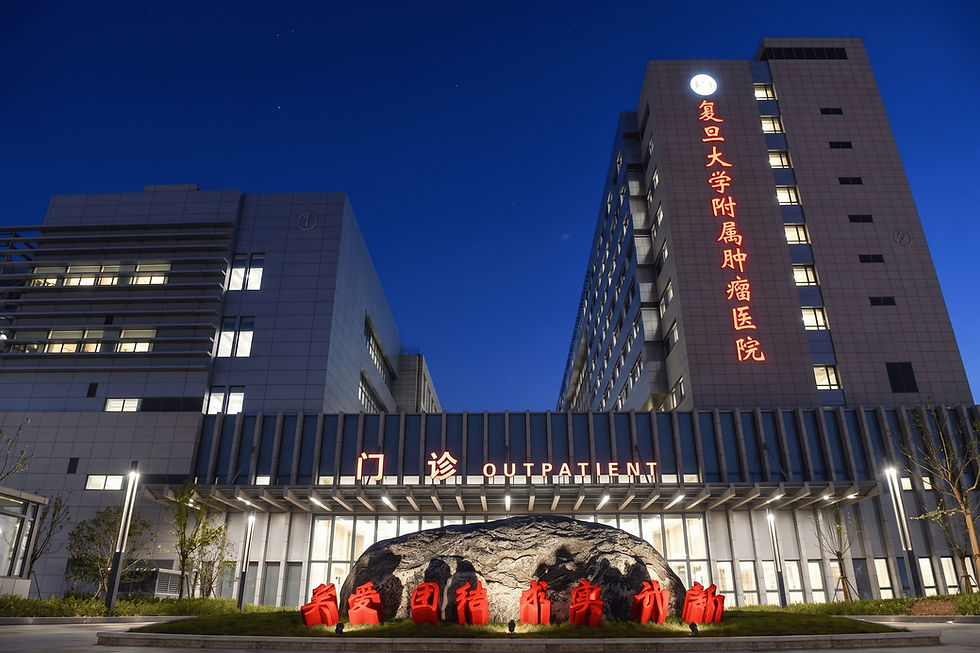
Fudan University Shanghai Cancer Center combines dedicated colorectal surgical services with a colorectal comprehensive-treatment programme. The latter, established in 2019, describes close collaboration between systemic treatment, radiotherapy, colorectal surgery, liver surgery and interventional services.
The colorectal surgery service documents laparoscopic and robotic operations, very low rectal cancer surgery, lateral lymph-node dissection, combined bowel-and-liver procedures and treatment of recurrence. Its published service profile records more than 2,700 colorectal operations in the second colorectal surgical department during 2023. Volume describes experience, not a personalised outcome estimate.
This is a relevant option when an assessment needs to connect the initial treatment sequence with surgical technique, function and later recovery. The hospital operates across campuses, so the appointment and admission location should be confirmed. Patients should receive a clear explanation of both operative and non-operative alternatives appropriate to their case.

Professor Xinxiang Li
Professor; Colorectal Surgery
Professor Li's institutional profile describes laparoscopic colorectal surgery, very low rectal cancer sphincter-preserving procedures and comprehensive treatment of advanced colorectal disease. His work includes the full course of rectal cancer surgical care. The relevant assessment is whether a proposed operation can achieve clearance with an acceptable functional result.

Professor Sanjun Cai
Professor; Multidisciplinary Colorectal Cancer Care
The centre identifies Professor Cai as a senior colorectal multidisciplinary specialist and the academic leader of its comprehensive-treatment service. His documented interests include colorectal cancer clinical care and research. This provides a broad treatment-planning perspective when surgery, radiation and medicines need to be considered together.
Sun Yat-sen University Cancer Center — Guangzhou

Sun Yat-sen University Cancer Center's colorectal programme brings together colorectal surgery, medical oncology, radiotherapy, liver surgery, imaging, interventional treatment, pathology and endoscopy. Its institutional description emphasises treatment tailored to stage, tumour biology and the patient's circumstances.
The named clinicians have documented interests in laparoscopic surgery, transanal minimally invasive procedures, liver-metastasis management, chemotherapy and stoma rehabilitation. This combination is relevant when the question involves more than a single operation, particularly in recurrent or metastatic disease.
For international patients, a useful review should identify the lead team, the immediate treatment decision and the plan for continued care after returning home. If liver-directed treatment or surgery for metastases is proposed, the recommendation should explain how it fits with systemic treatment and which findings make the approach reasonable.

Professor Zhizhong Pan
Professor and Chief Physician; Colorectal Surgery
Professor Pan's institutional profiles describe laparoscopic colorectal surgery, transanal endoscopic microsurgery and comprehensive treatment of liver metastases. He also has documented experience in multidisciplinary colorectal care. His interests are particularly relevant when local treatment and systemic therapy need to be planned as one pathway.

Dr. Gong Chen
Chief Physician; Colorectal Cancer Surgery and Comprehensive Care
Dr. Chen's institutional profile describes diagnosis, surgery, chemotherapy and clinical research in colorectal cancer. It also records an interest in stoma rehabilitation. This supports a discussion of the whole treatment course, including recovery and the practical needs of a patient living with a stoma.
A Private Hospital Option for International Patients
Guangzhou Royal Lee Cancer Hospital is a private oncology hospital with a gastrointestinal service that reports laparoscopic colorectal surgery and very low rectal sphincter-preserving operations. Its international medical centre describes remote pre-assessment, interpretation and cross-border coordination.
The hospital describes itself as JCI-accredited. Accreditation concerns organisational standards; it does not establish better colorectal cancer outcomes. This is an additional service-setting option, not a ranked equivalent of the public specialist shortlist. Compare the proposed treatment, clinician, full estimate and follow-up arrangements rather than choosing on amenities alone.
Get a Second Opinion
For suitable cases, ChinaCureLink can then coordinate an online consultation with the specialist to discuss the technical treatment details directly. The purpose is to help the patient understand which treatment option and which specialist center may be most appropriate before making an international treatment decision.
What Patients Say About ChinaCureLink & Medebound HEALTH

China CureLink operates under Medebound HEALTH — an internationally recognized healthcare navigation company incorporated in New York, with operations across North America and Asia-Pacific.
Frequently Asked Questions
Which Is the Best Colorectal Cancer Hospital in China for International Patients?
There is no single best centre for every case. The Cancer Hospital of the Chinese Academy of Medical Sciences, Fudan University Shanghai Cancer Center and Sun Yat-sen University Cancer Center have documented colorectal services. Choose according to colon or rectal location, stage, biomarkers, previous treatment and the decision that needs specialist review.
Can Rectal Cancer Treatment in China Avoid a Permanent Stoma?
Sphincter-preserving surgery is documented at the featured centres, but it is not suitable for every tumour. The tumour's position, extent, response to previous treatment and expected bowel function influence the decision. Some patients still need a temporary or permanent stoma. A preservation plan must protect cancer clearance as well as function.
Is Immunotherapy Suitable for Every Colorectal Cancer Patient?
No. MMR/MSI status and the clinical setting matter. MSI-H/dMMR cancers have different immunotherapy evidence from MSS/pMMR cancers. Recent Chinese studies report responses in selected patients, but they do not establish suitability or routine access for everyone. The specialist should identify the exact regimen, evidence and route of access for the case.
About ChinaCureLink
ChinaCureLink helps patients across the world access the best cancer treatment at China's top hospitals, without the delays, language barriers, and administrative confusion that typically come with seeking care abroad.
We connect patients directly with China's top cancer hospitals, ensuring that from the first case submission through to treatment and follow-up, every step is guided, translated, and coordinated by a team experienced in cross-border patient care.
ChinaCureLink is proudly affiliated with Medebound HEALTH — founded by US physicians, with over 10 years of experience and more than 3,000 patients served worldwide, Medebound HEALTH is recognized by Forbes and it is one of the most trusted patient cross-border concierge service company across North America and the Asia Pacific.
References
Sources checked on 3 November 2026. Clinical schedules, study recruitment, access and accreditation can change.
Disclaimer
This article is for informational purposes only and is not medical or financial advice. Treatment eligibility, protocols, and costs vary by individual case — confirm specifics with a coordinator and treating physician before making any decisions.


